I build custom white-label apps and websites — your name, your logo, your business.
Smart people don’t hire from a resume. Try my work right now.
Full-stack production systems, designed and shipped fast.
My latest apps, all live products, below: payments, bookings, customer pipelines, three languages — every one designed, written, coded, launched, and run by me, copy to design to launch. If it convinces you, I’m one message away.
Payments and subscriptions, multi-tenant SaaS, encrypted health data, real-time features. Deliberately lean infrastructure: right-sized machines, nothing over-provisioned — cheap to run and light on energy. Everything shown below is live in production.
If it's on this list, I've already built it for a real business. I can show you it working before you spend a dollar. Tap any card to see what it means for you.
Admin dashboardsYour whole business on one screen: sales, customers, appointments, and what needs attention today. You stop guessing and start deciding from live numbers, without juggling five different apps.
▾
Automated email confirmations and remindersConfirmations, reminders, and follow-ups that send themselves by email, in the customer's language. Set up once, never forgotten.
▾
Bilingual and trilingual sitesYour entire site, forms, and emails in English, Spanish, and French — switchable with one tap, written properly in each language. Customers buy more when they're spoken to in their own language, and most of your competitors only speak one.
▾
Booking and reservation sitesCustomers pick their time and book themselves, day or night, with deposits collected up front. No back-and-forth messages, no double bookings, and far fewer no-shows.
▾
Commission and referral trackingPartners and reps get their own tracked codes, every sale is credited to whoever brought it, and payouts become simple math instead of arguments.
▾
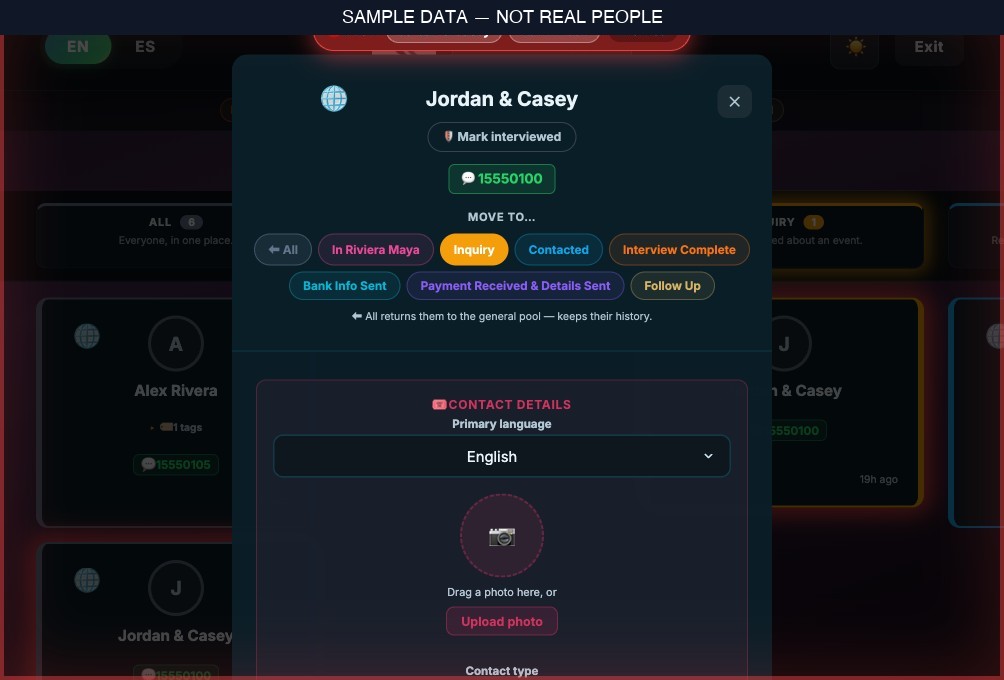
Customer tracking pipelinesEvery inquiry becomes a card that moves stage by stage from first contact to paid, so you can see your whole funnel and its value at a glance. Nobody gets forgotten, and the next follow-up is always obvious.
▾
Eco-friendly, right-sized hostingYour app runs on machines sized to your real traffic instead of a bloated hosting package. That means lower bills, less wasted energy, and room to scale up the day you actually need it.
▾
Interactive mapsYour locations on a live map customers can explore — find the nearest spot, tap for details, get directions. Works beautifully on phones.
▾
Light and dark modeEvery app can ship with a light and a dark look, switched with one tap. Customers read comfortably by day or night — try it on any of my live sites below.
▾
Live demos with sample dataA try-it-yourself demo of your product, filled with invented sample people and resetting itself automatically. Prospects convince themselves before they ever message you.
▾
Membership programsPaid memberships with logins, perks, and automatic renewals. Recurring revenue you can count on every month, and customers with a reason to keep coming back to you instead of shopping around.
▾
Online forms and e-signaturesPaperwork becomes a link: customers fill everything out on their phone and sign with a fingertip before they ever walk in. Nothing gets lost, nothing is illegible, and it's all stored safely.
▾
Payment and subscription systemsTake cards, deposits, and recurring subscriptions online, the moment someone decides to buy. Money arrives while the excitement is high, and renewals bill themselves without you chasing anyone.
▾
QR codes and redemptionPrintable QR codes customers scan to redeem deals or check in, validated live so a code can't be reused or faked. Perfect for passes, events, and promos.
▾
Qualification quizzesA short quiz that sorts serious buyers from window-shoppers before they reach you. Your time goes only to people who qualify.
▾
Secure handling of private dataSensitive customer information is encrypted, access-controlled, and backed up automatically every day. Your customers can trust you with their details, and a stolen file would be unreadable gibberish.
▾
Voice notes and speech-to-textCustomers talk instead of type, and their recordings become clean text automatically. Less friction for them, readable records for you.
▾
WhatsApp notifications and automationsYour business talks where your customers already live: instant WhatsApp alerts to you when a lead arrives, and confirmations and reminders to them. WhatsApp messages actually get read — email mostly doesn't.
▾
White-label versionsAny app I build can launch entirely under your brand — your name, your logo, your colors on every screen. Nobody ever sees mine.
▾
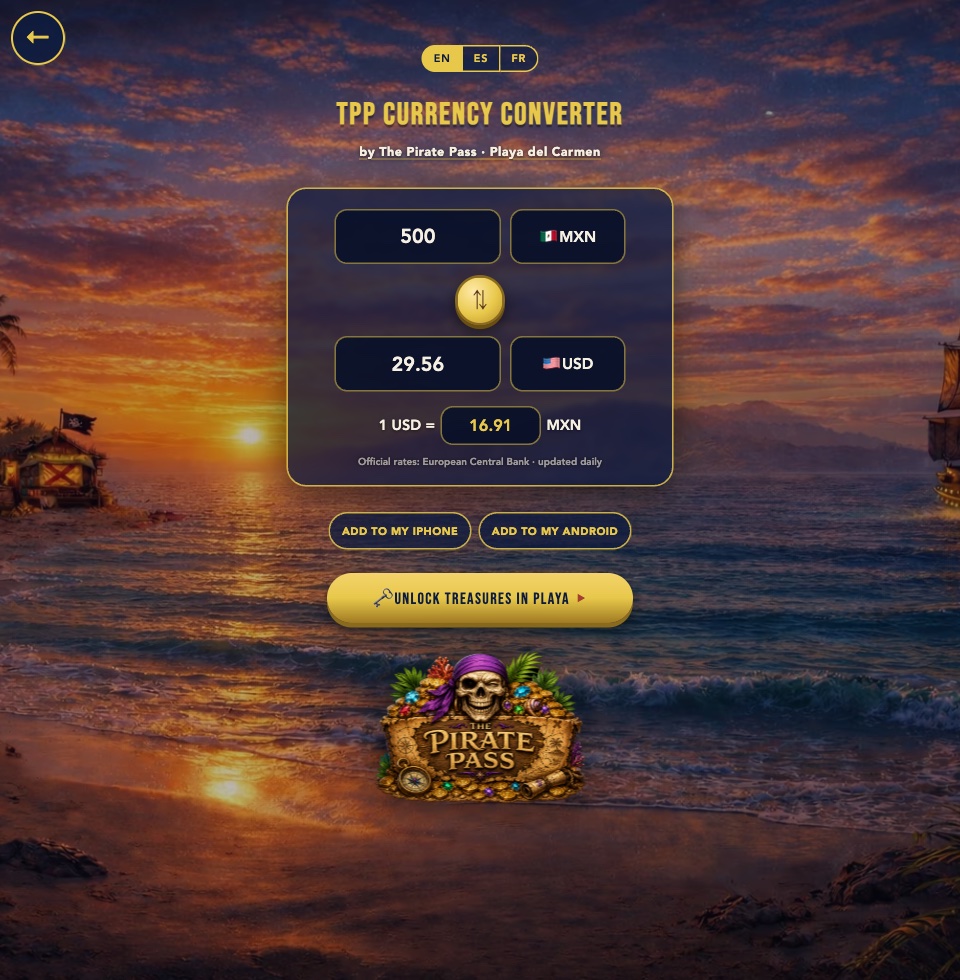
Currency conversionA live tool showing real exchange rates, updated daily — see it working right now at thepiratepass.com/converter.
▾
Latest work
Not mockups. Not concepts. A selection of systems serving real traffic today, built, secured, and operated end to end.
White-label option: your name, your logo, your colors
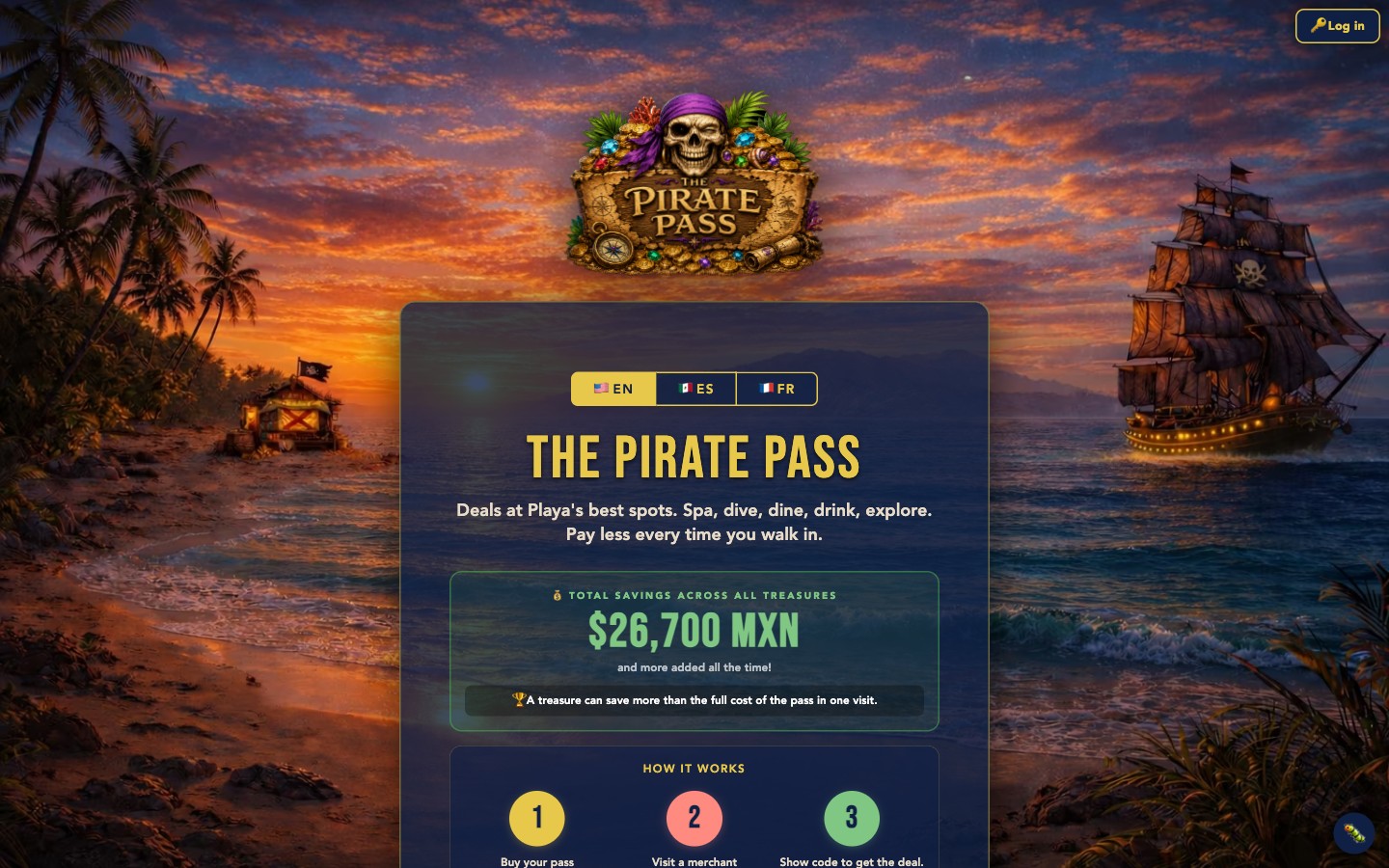
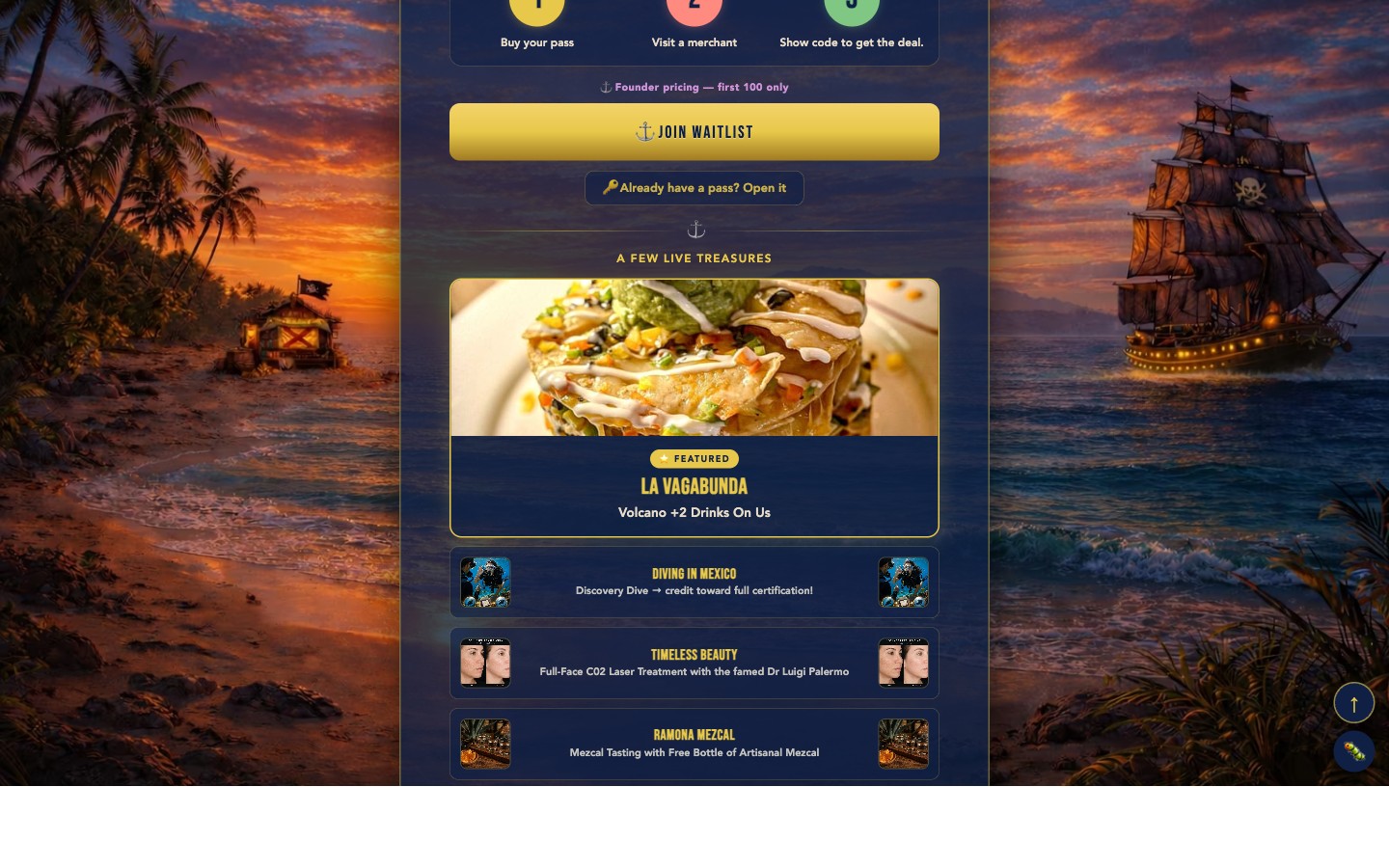
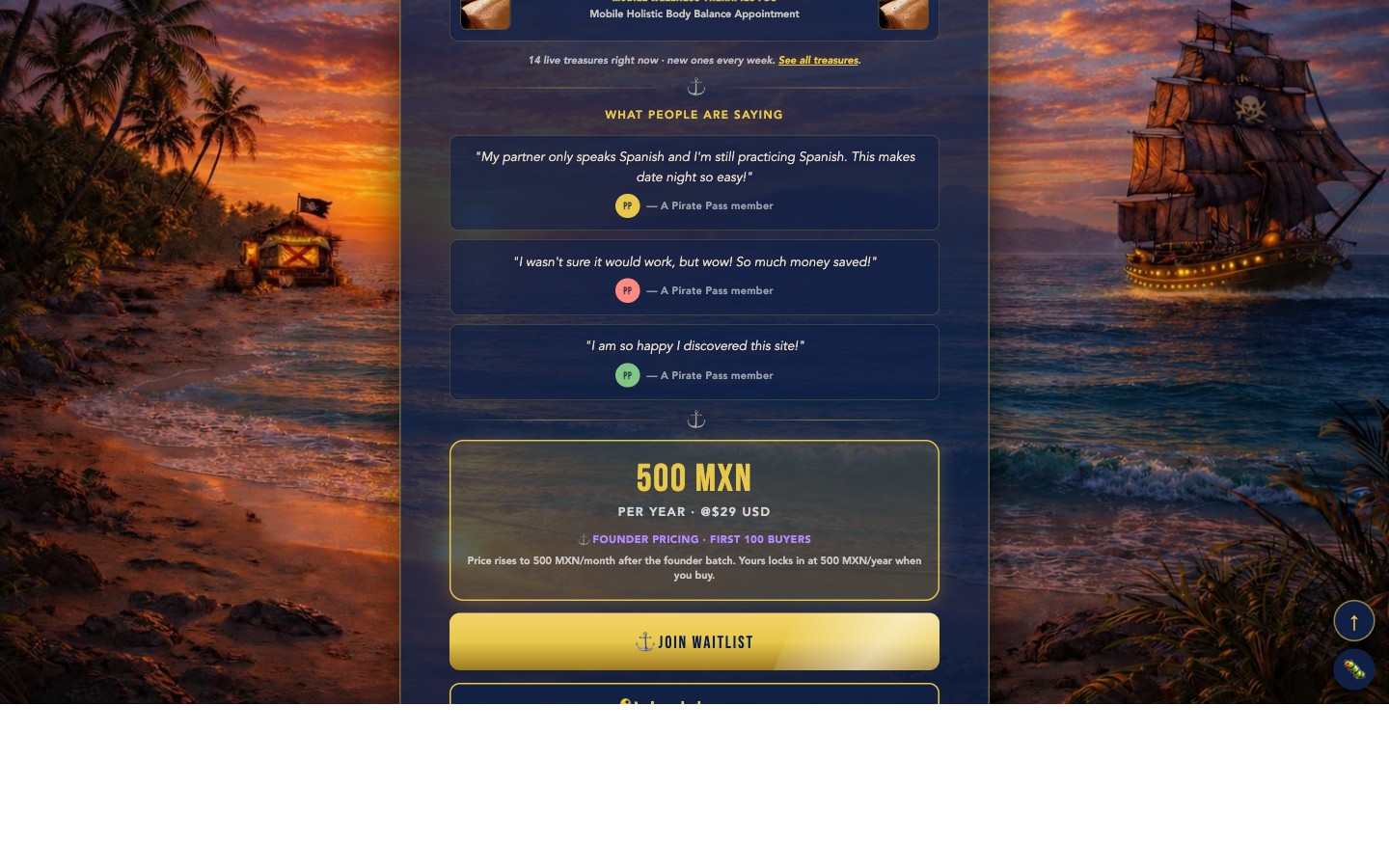
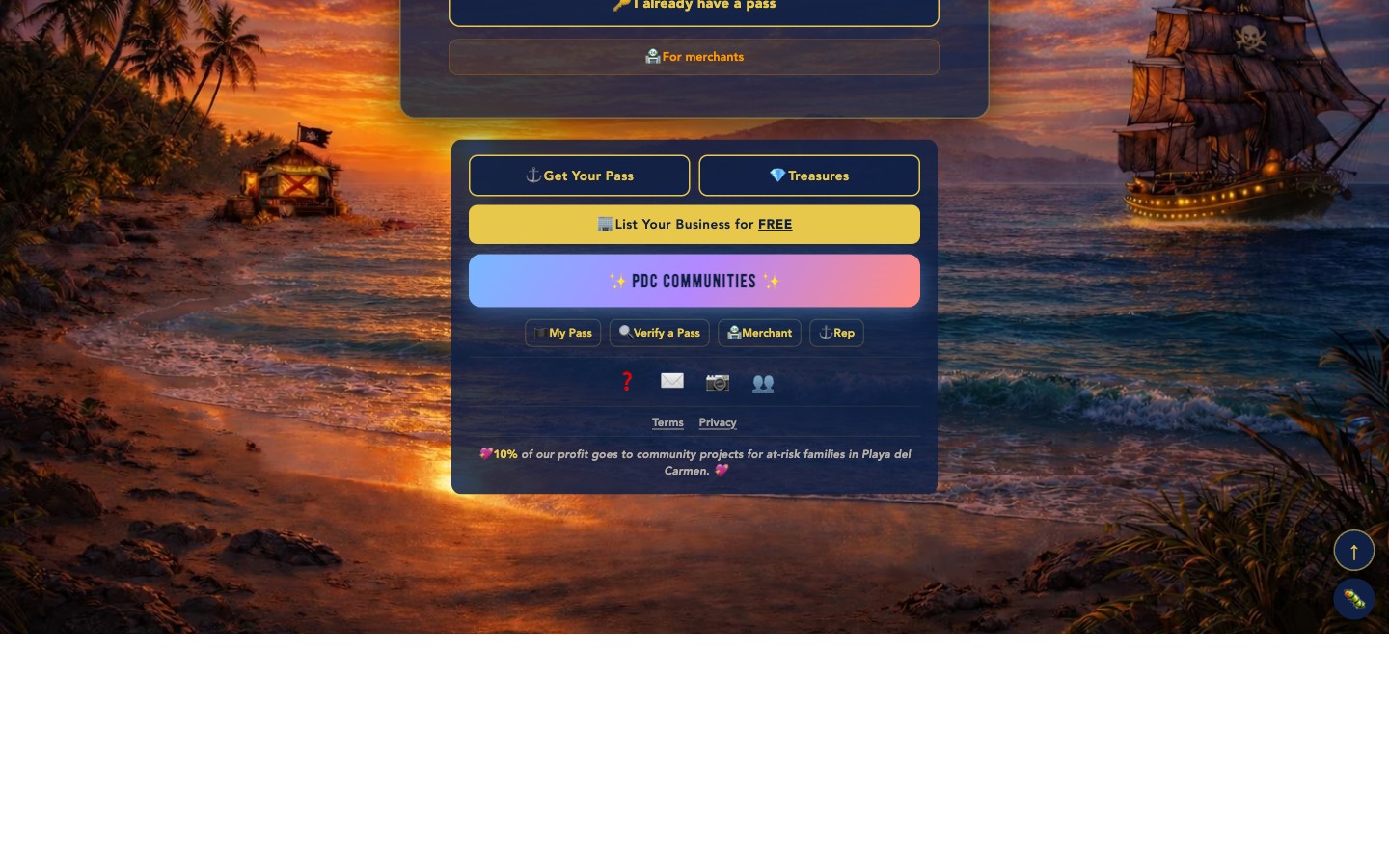
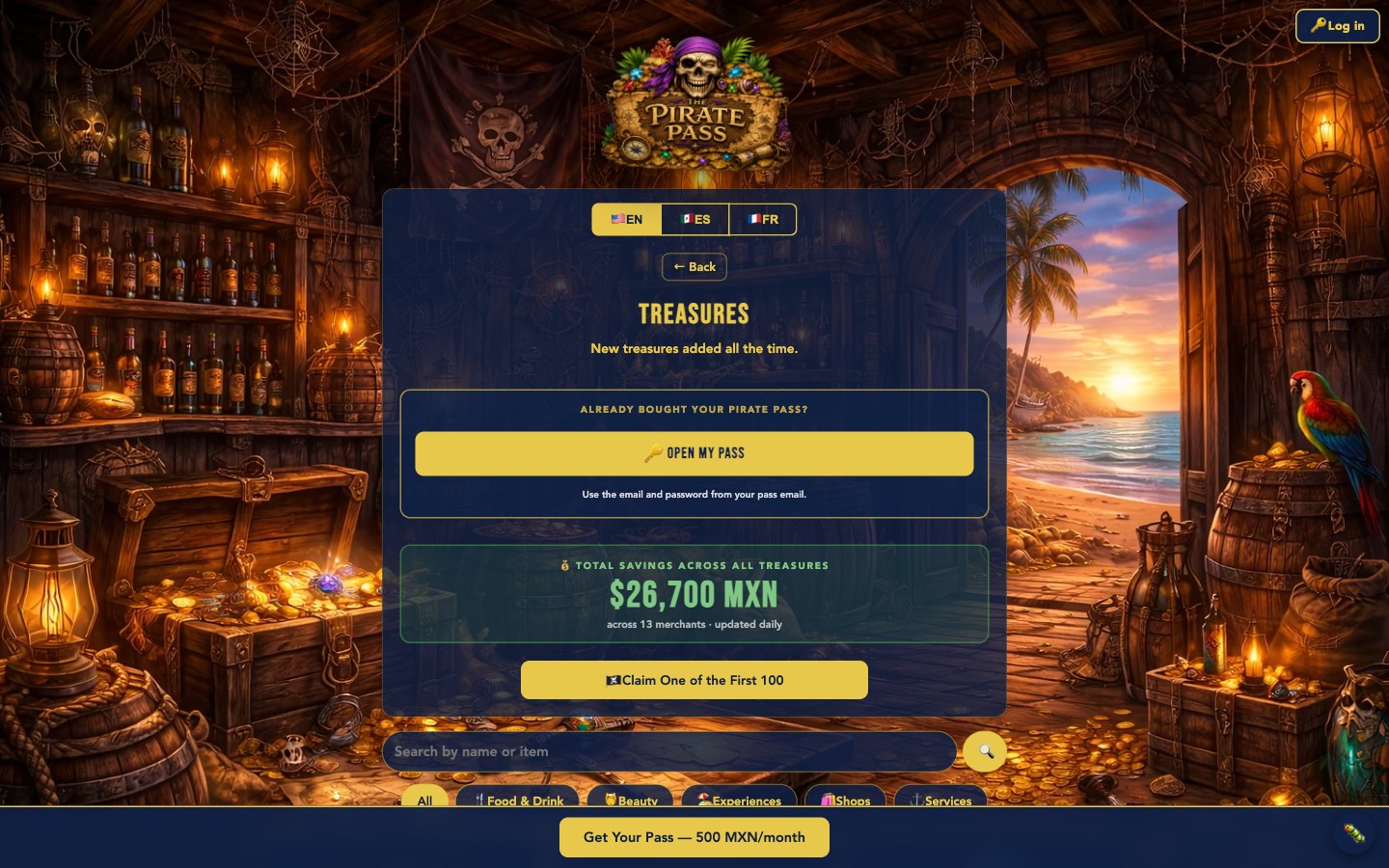
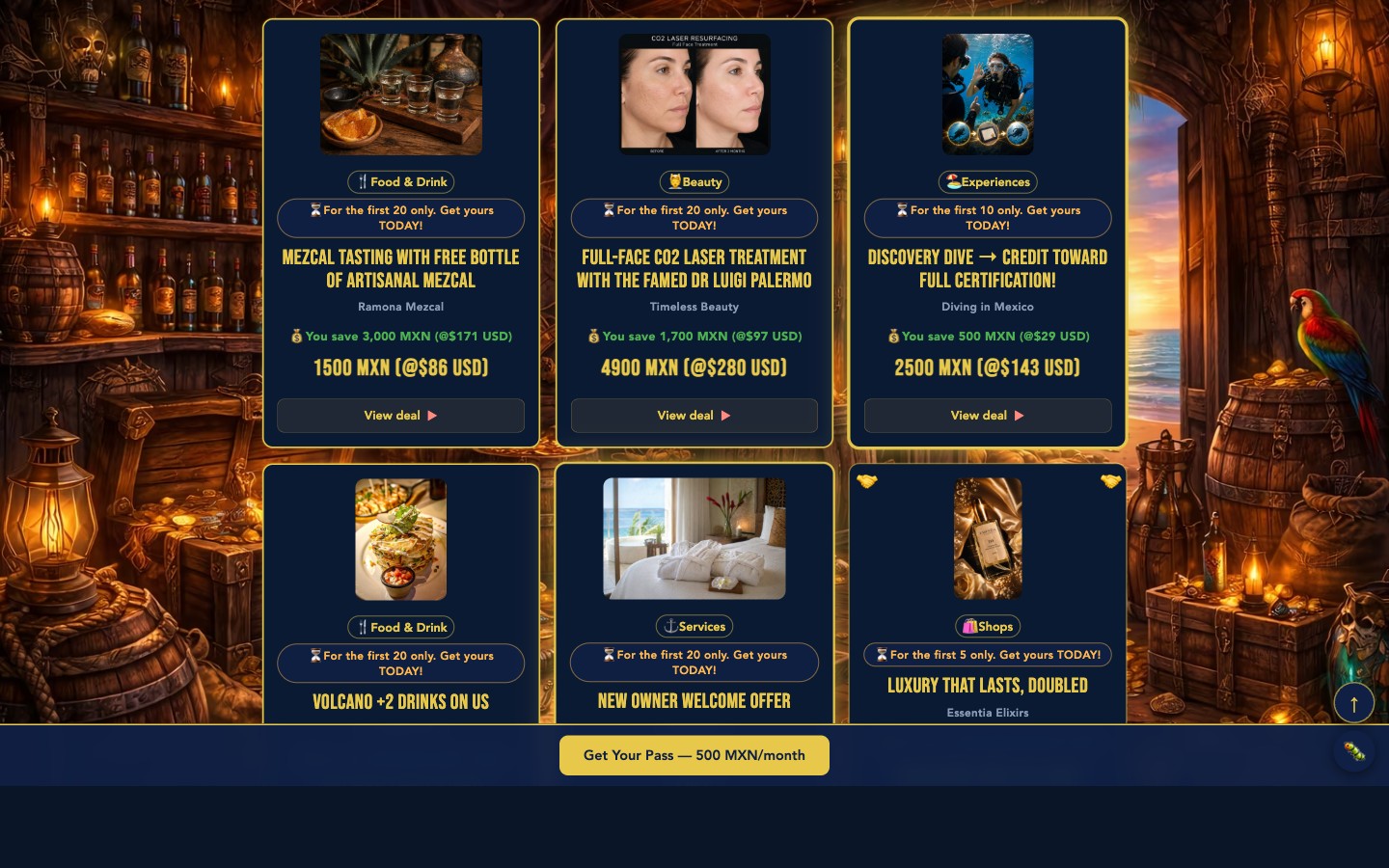
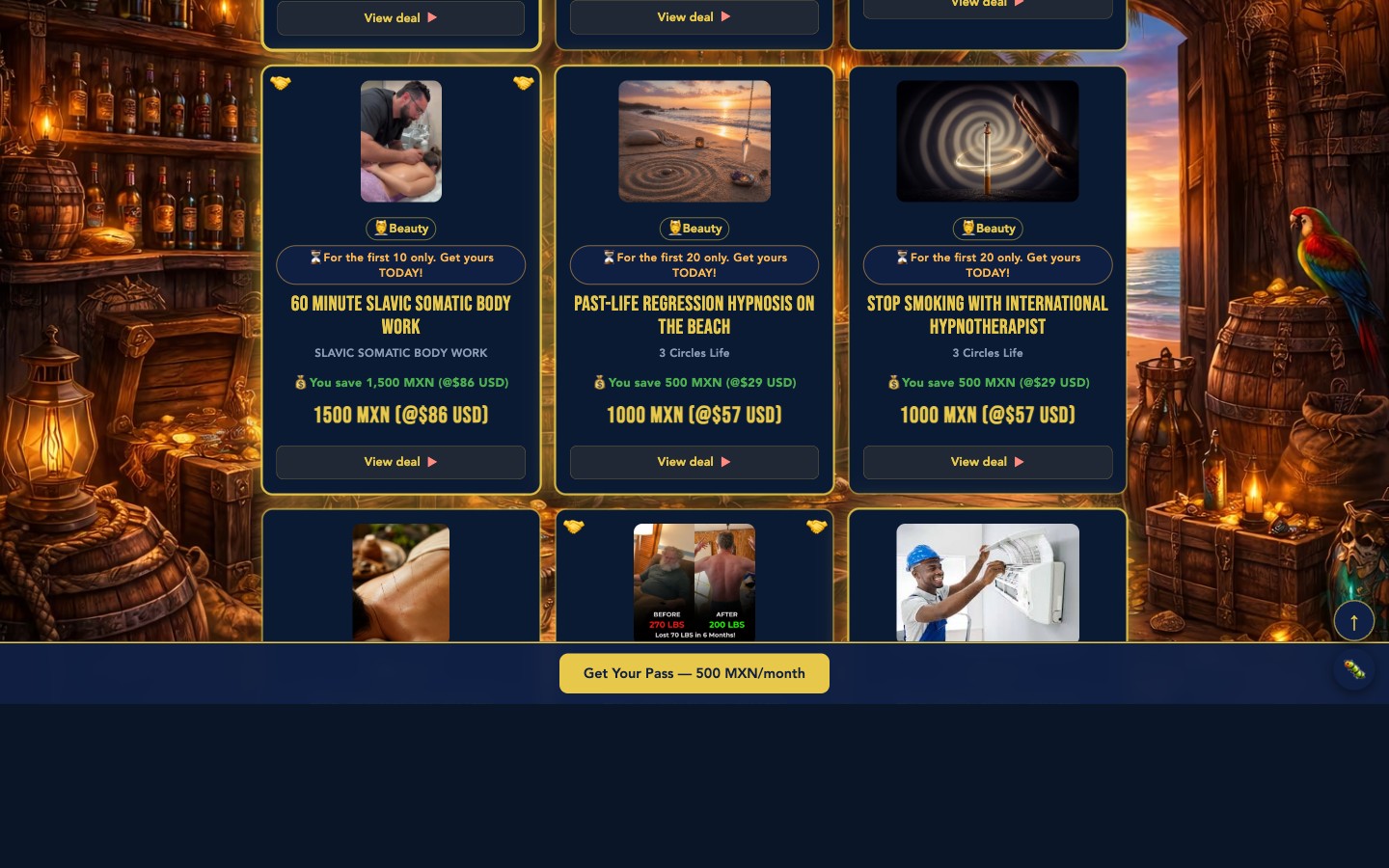
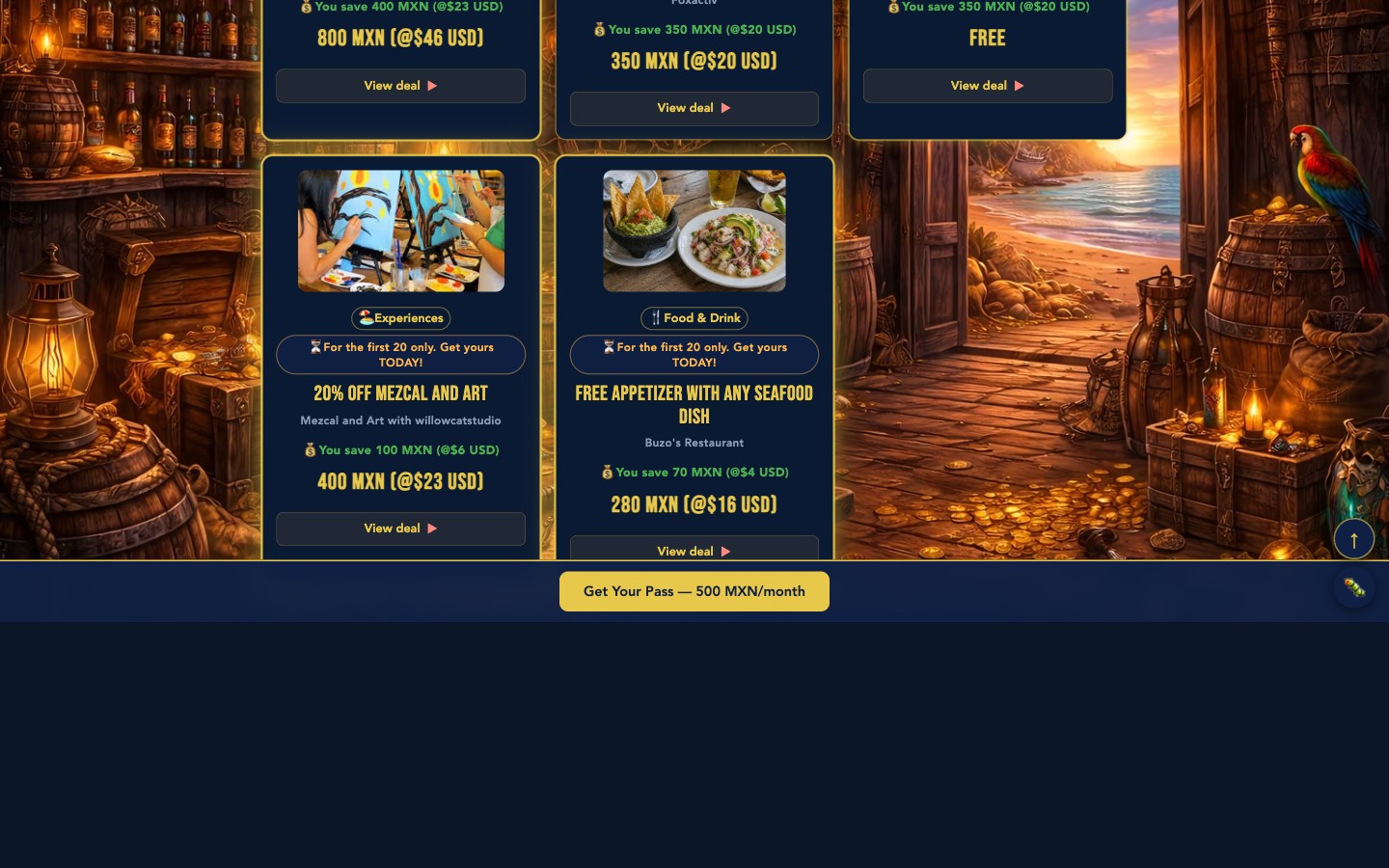
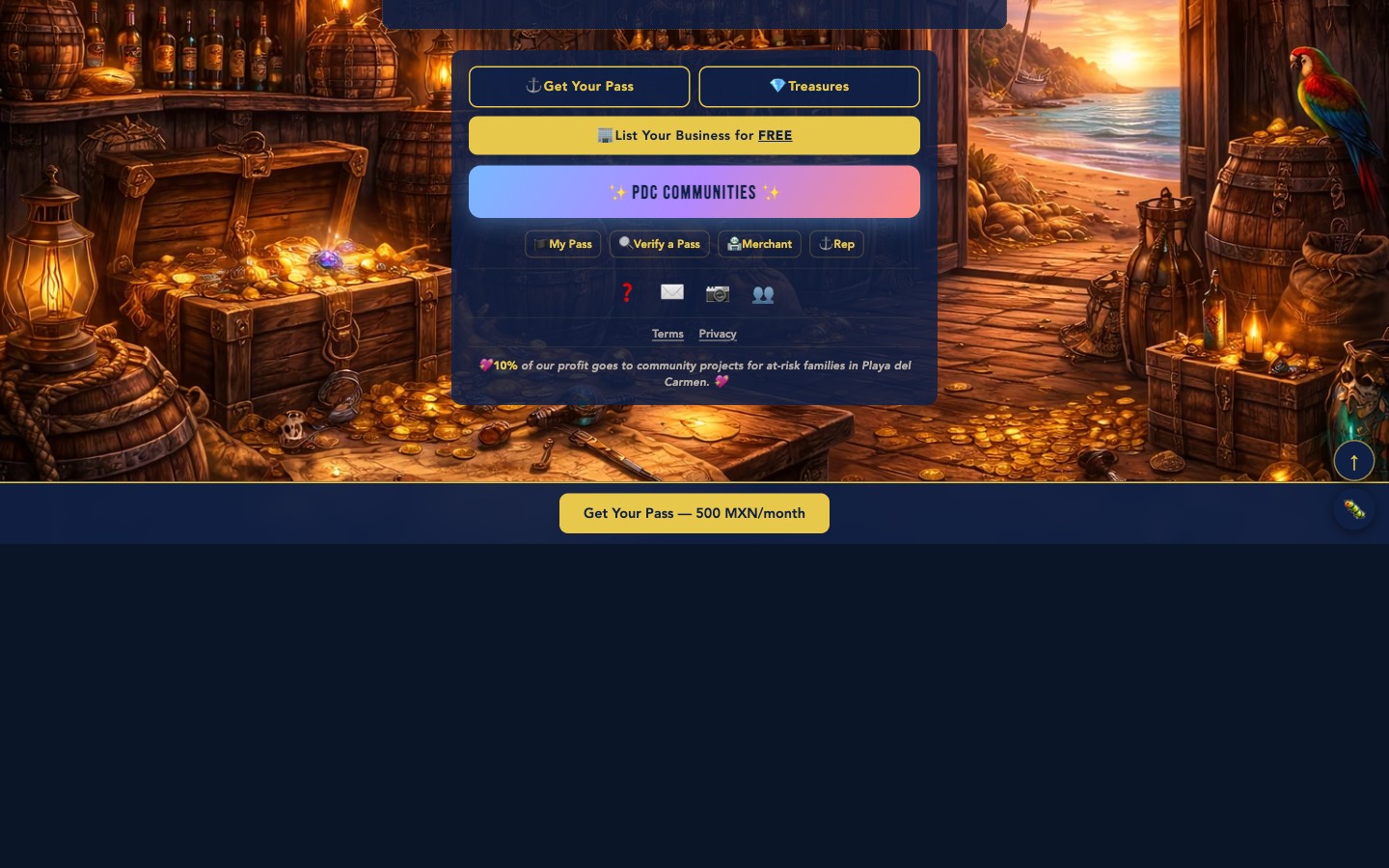
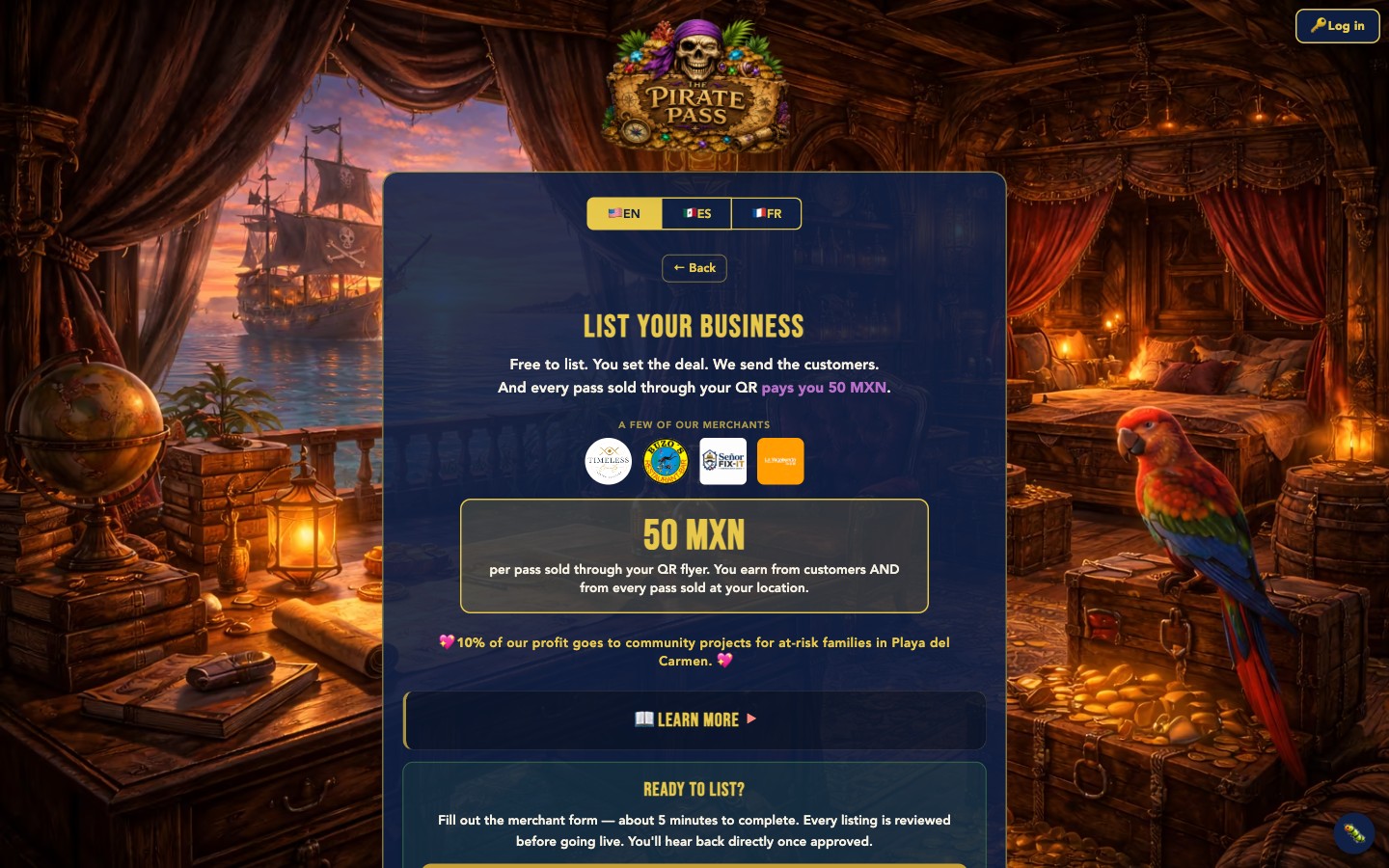
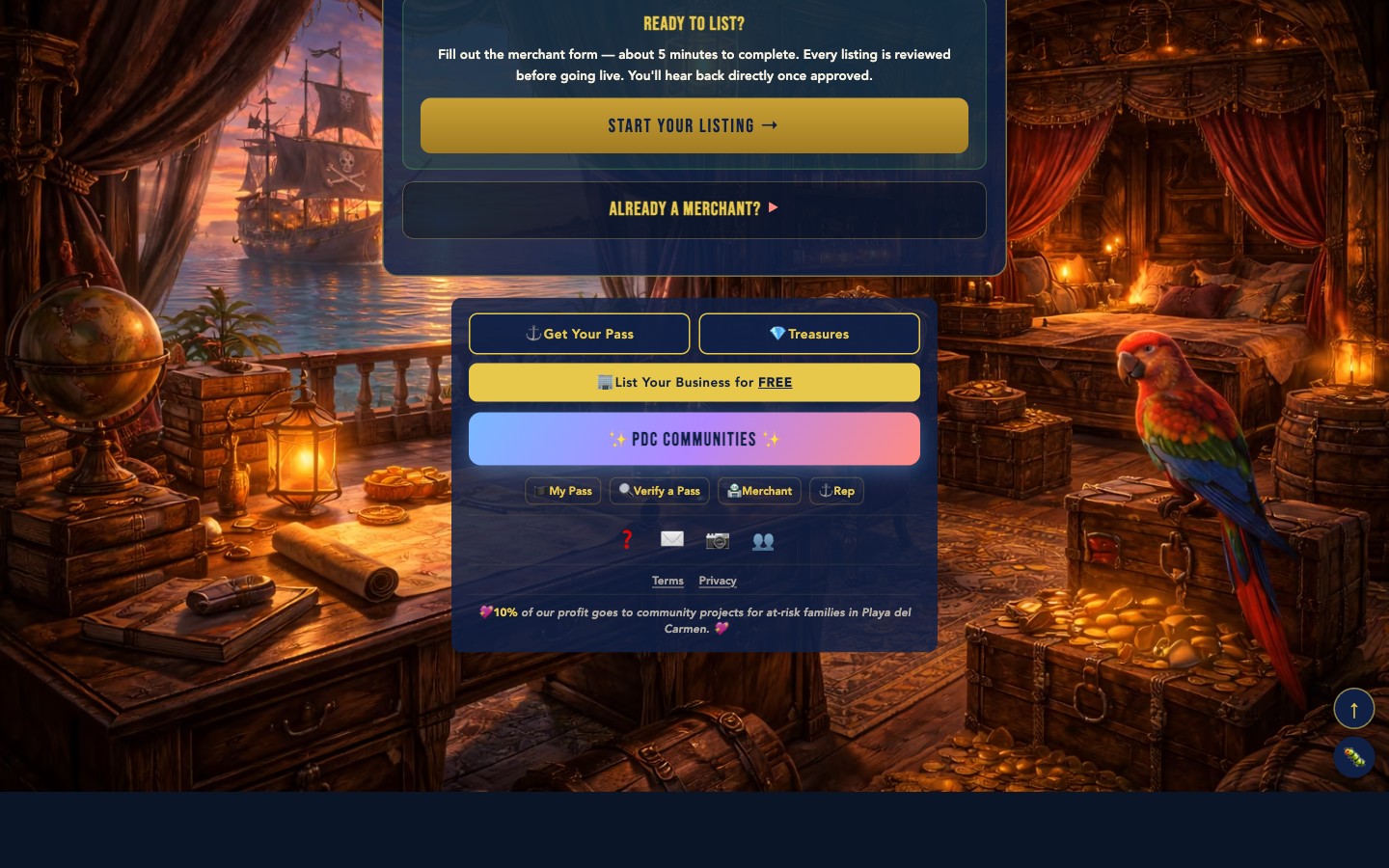
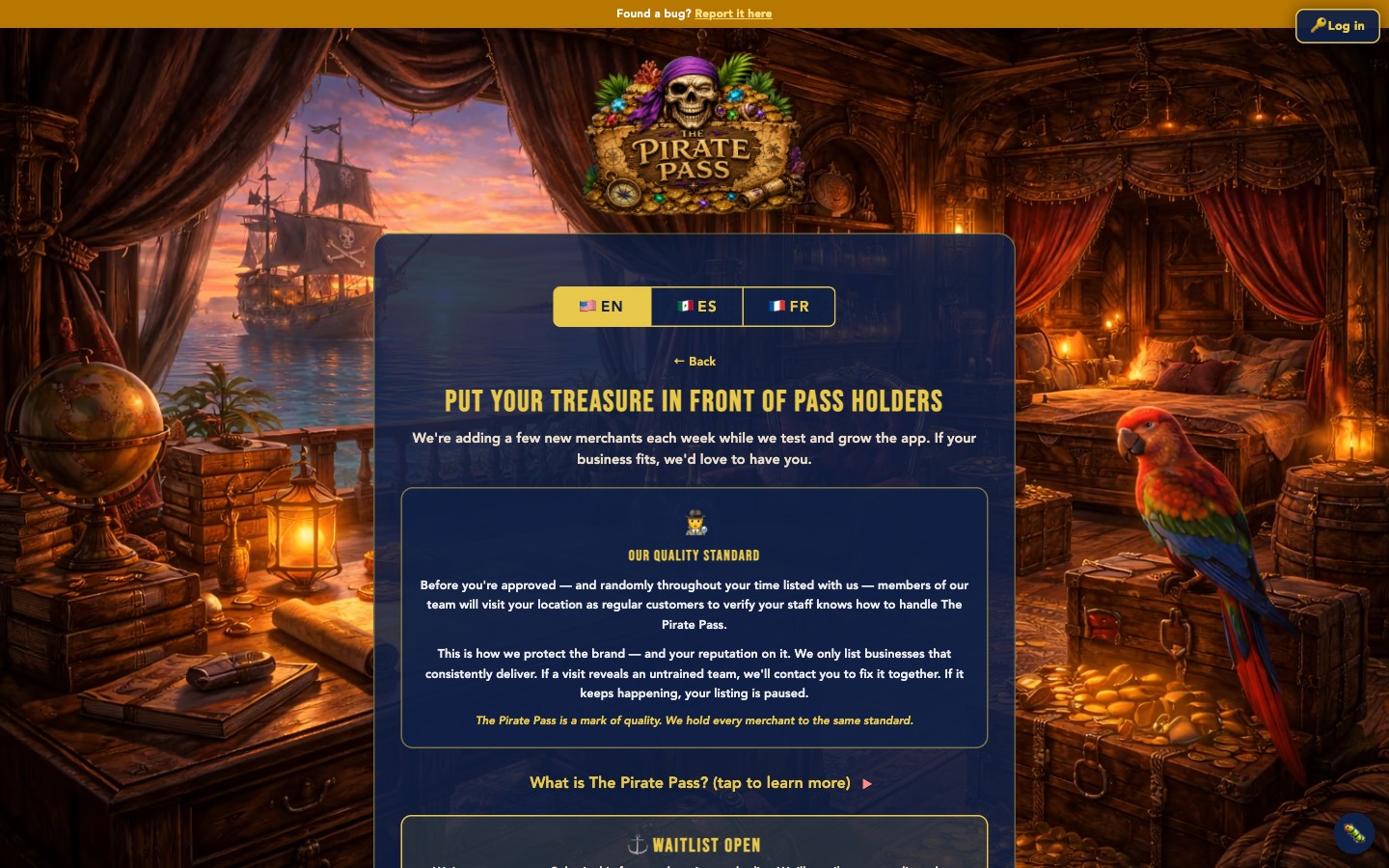
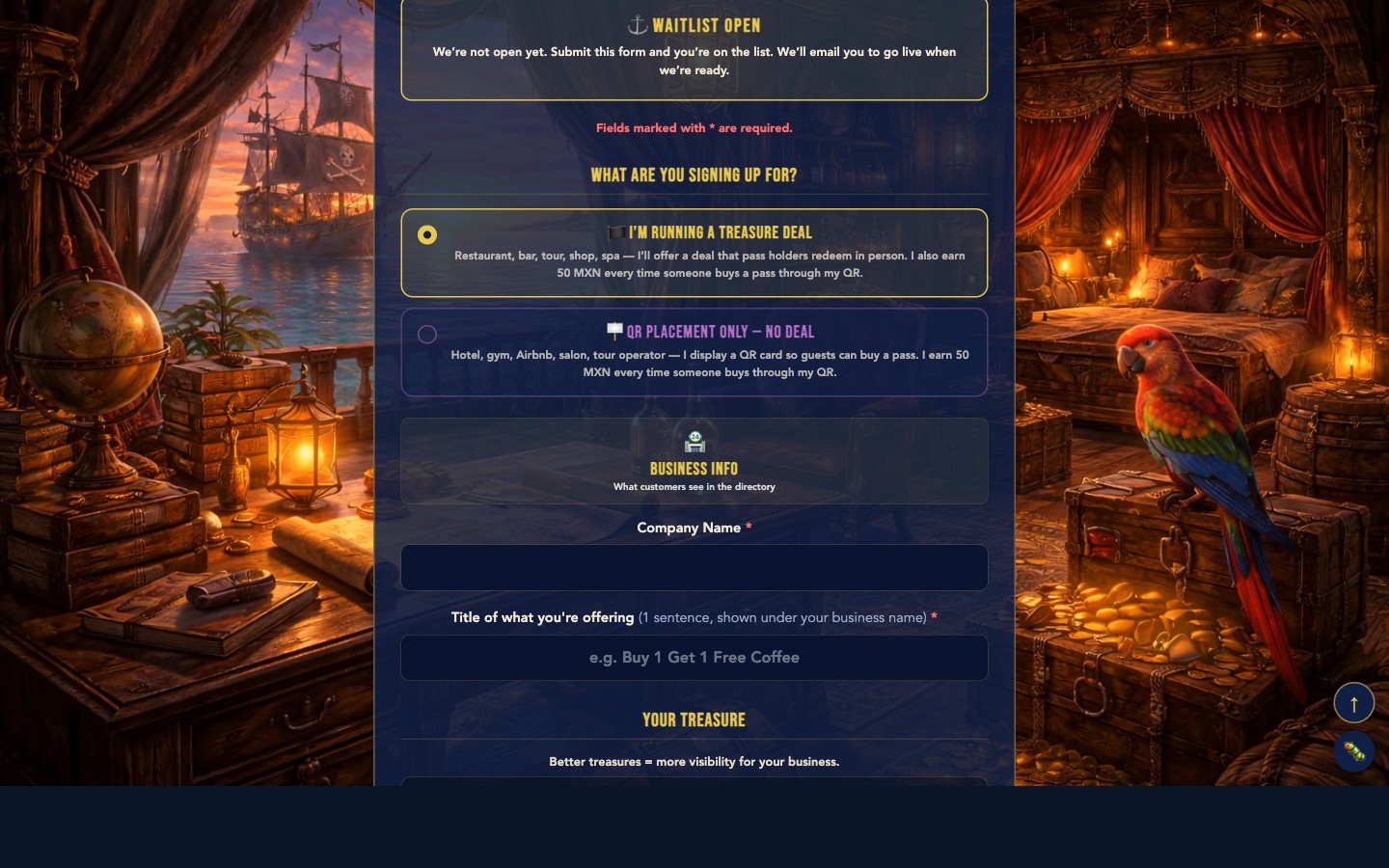
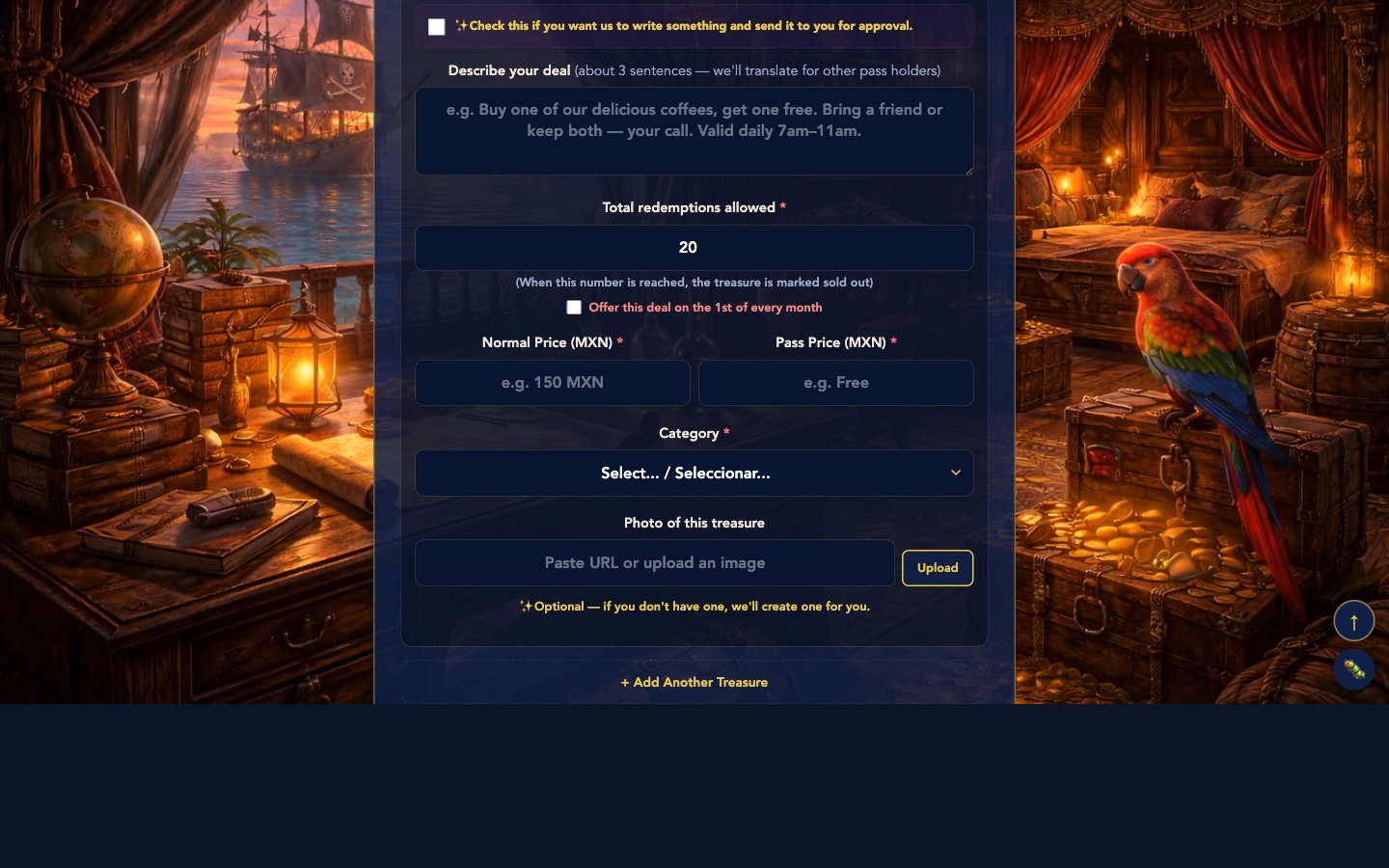
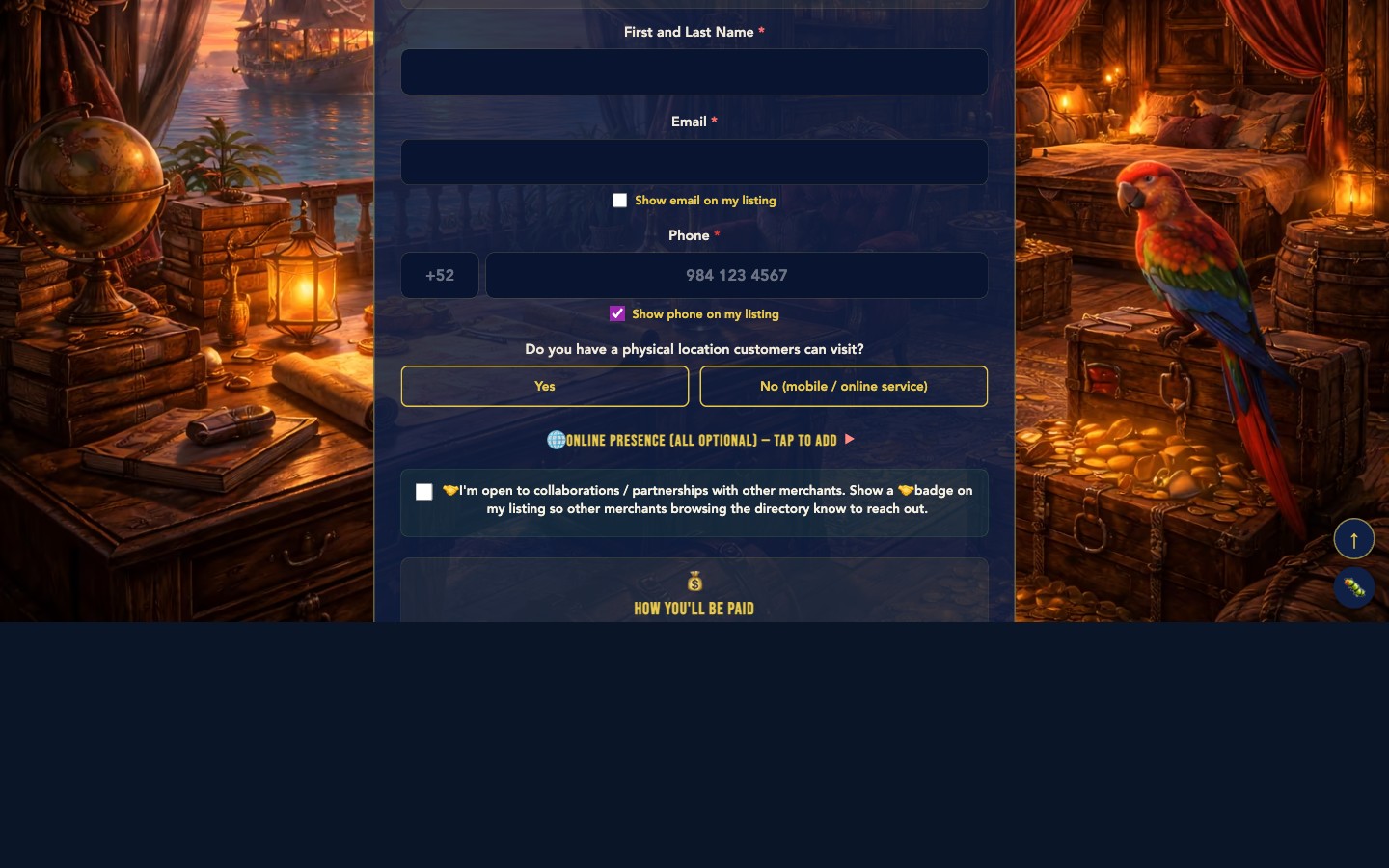
A complete paid-membership business in a box. Customers buy online in two minutes, businesses redeem with a code, sellers collect commissions automatically. Payments, redemptions, and commissions all record themselves.
Members save more than the pass costs within a few visits
Local businesses get repeat customers without spending on ads
Payments, renewals, and rep commissions run themselves
Light and dark mode — try the toggle on the live site
Real-time currency converter with daily official rates — try it live
Stripe subscriptions with full webhook lifecycle (multi-currency adaptive pricing, refunds, disputes, gifting), commission ledger with clawbacks, 345 API endpoints, 60+ tables, ~19 scheduled jobs, custom email queue, four user portals plus a 131-endpoint admin, daily Stripe-to-database reconciliation, and a Three.js + MapLibre 3D game layer.
White-label option: your name, your logo, your colors
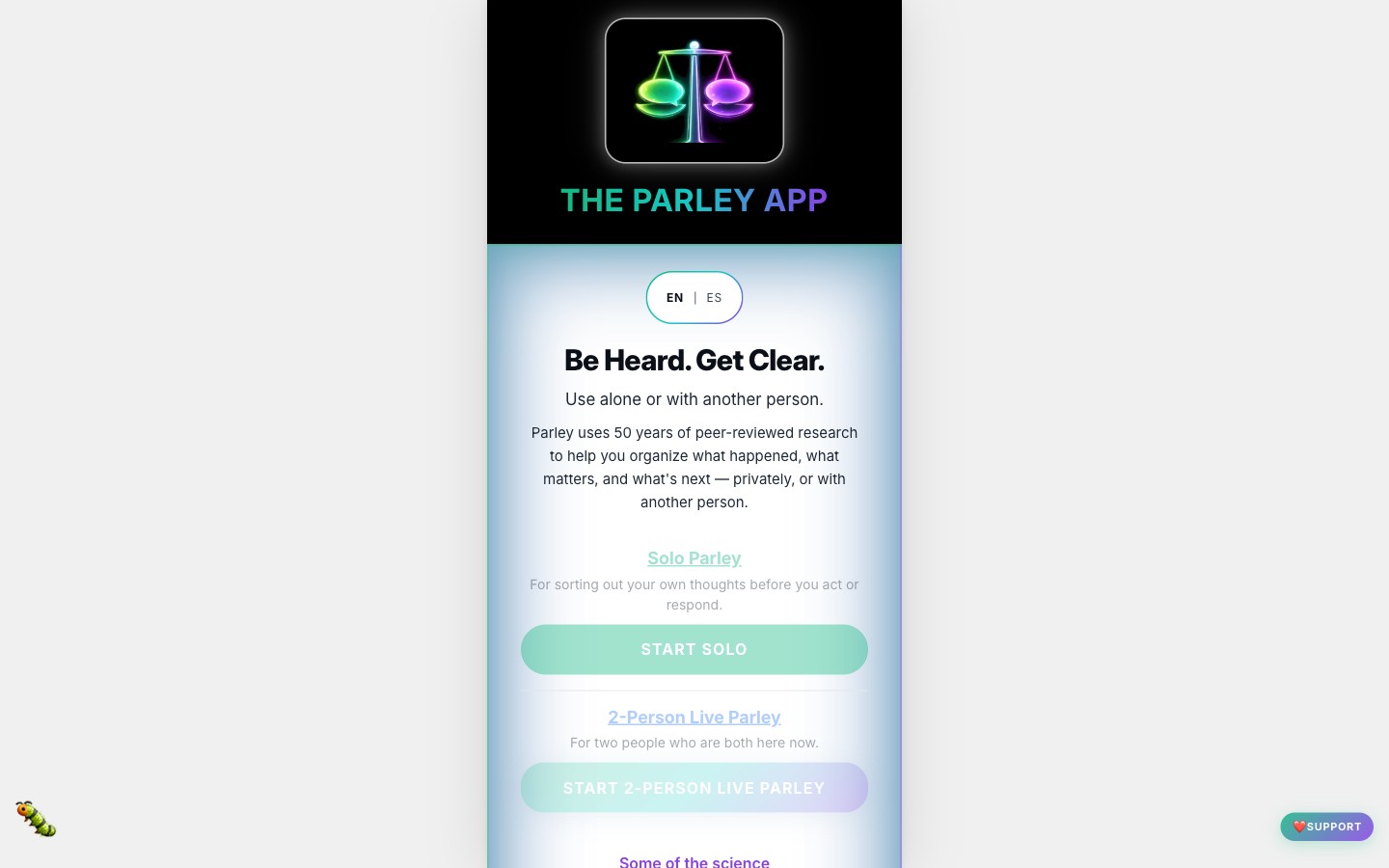
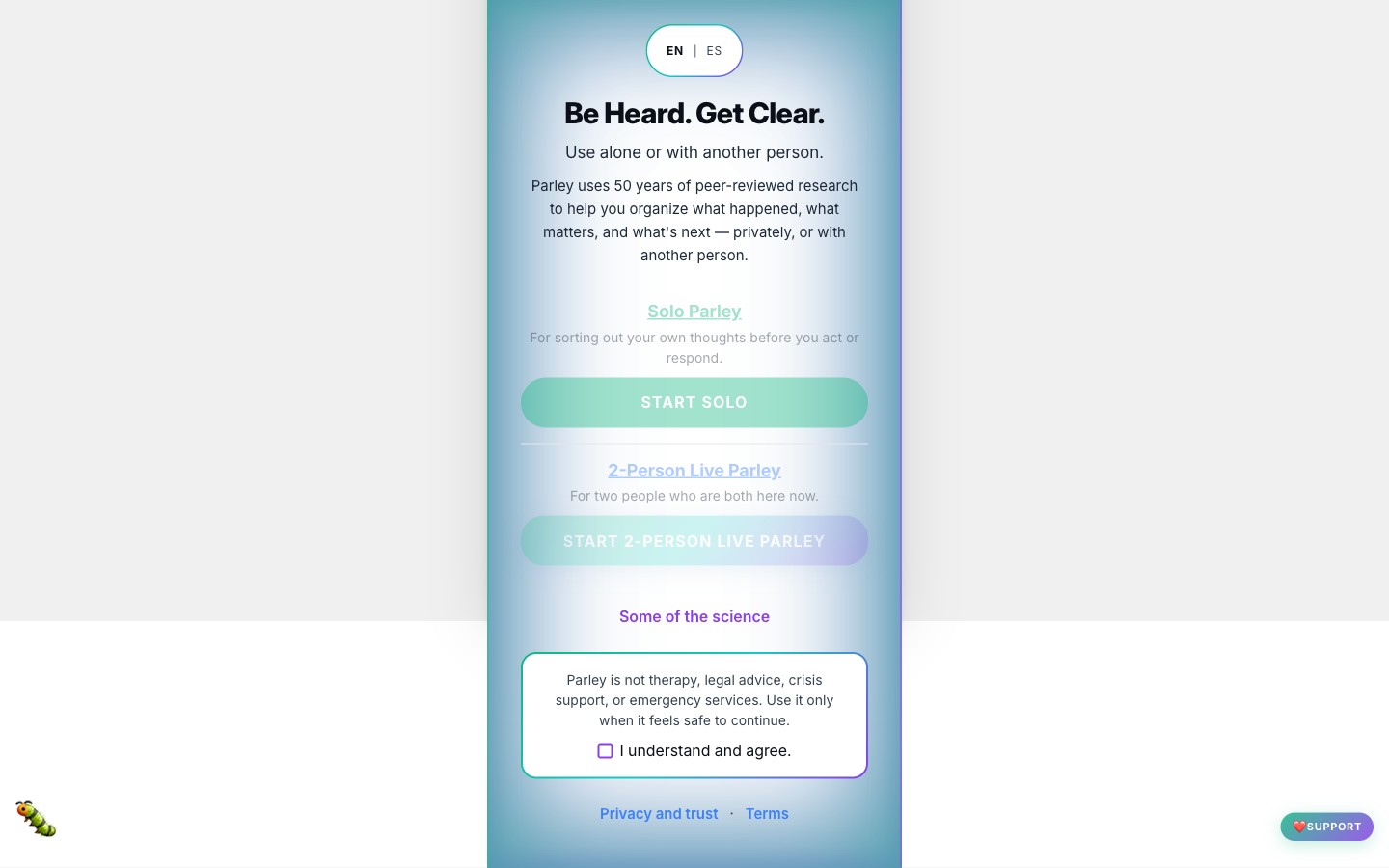
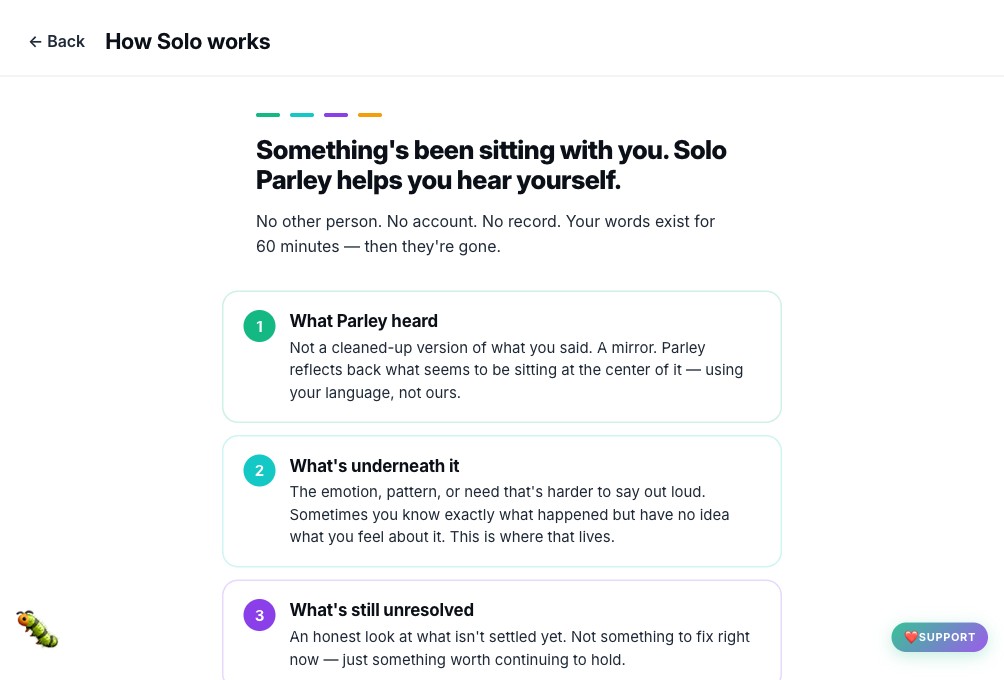
Two people, one tough conversation, and a calm guide that takes nobody's side — programmed with more than 50 years of peer-reviewed relationship research. Each person on their own phone, or solo to get clear on a problem. No accounts — all identifying info is erased within the hour.
A calm, structured process instead of a shouting match
Total privacy: no accounts, all identifying info erased within the hour
Your choice to keep it: email yourself a copy before it's wiped
Schedule your follow-up conversation before you leave
Works the moment you open it, on any phone
Light and dark mode — try the toggle on the live site
A guided-dialogue engine programmed from 50+ years of peer-reviewed communication research, voice-note transcription, live two-device sessions over WebSockets, nine structured session types, crisis-safety handling across 12+ screens, and an ephemeral privacy architecture with opt-in email export and scheduled follow-up sessions.
Node/ExpressWebSocketsSpeech-to-textEphemeral data
White-label option: your name, your logo, your colors
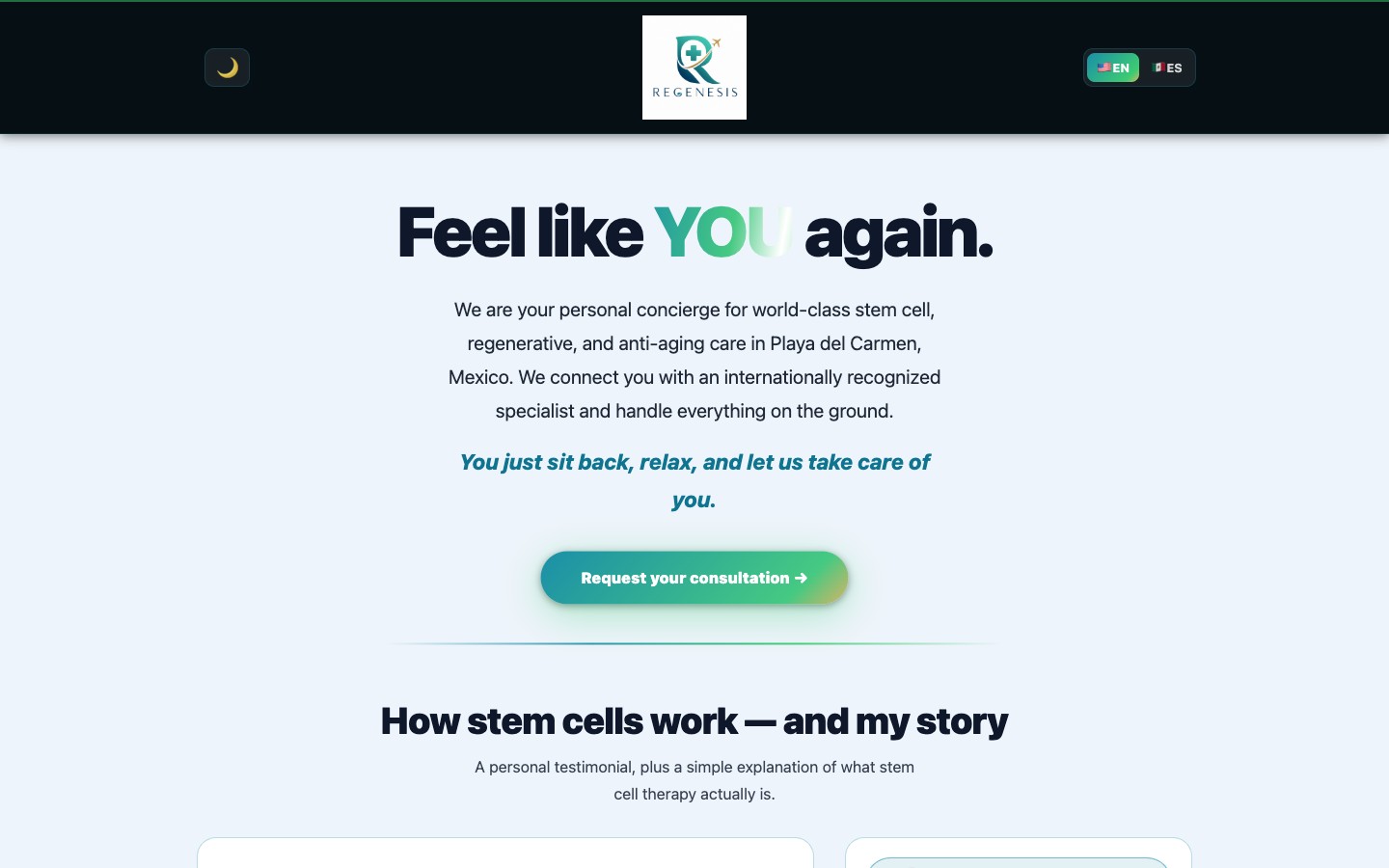
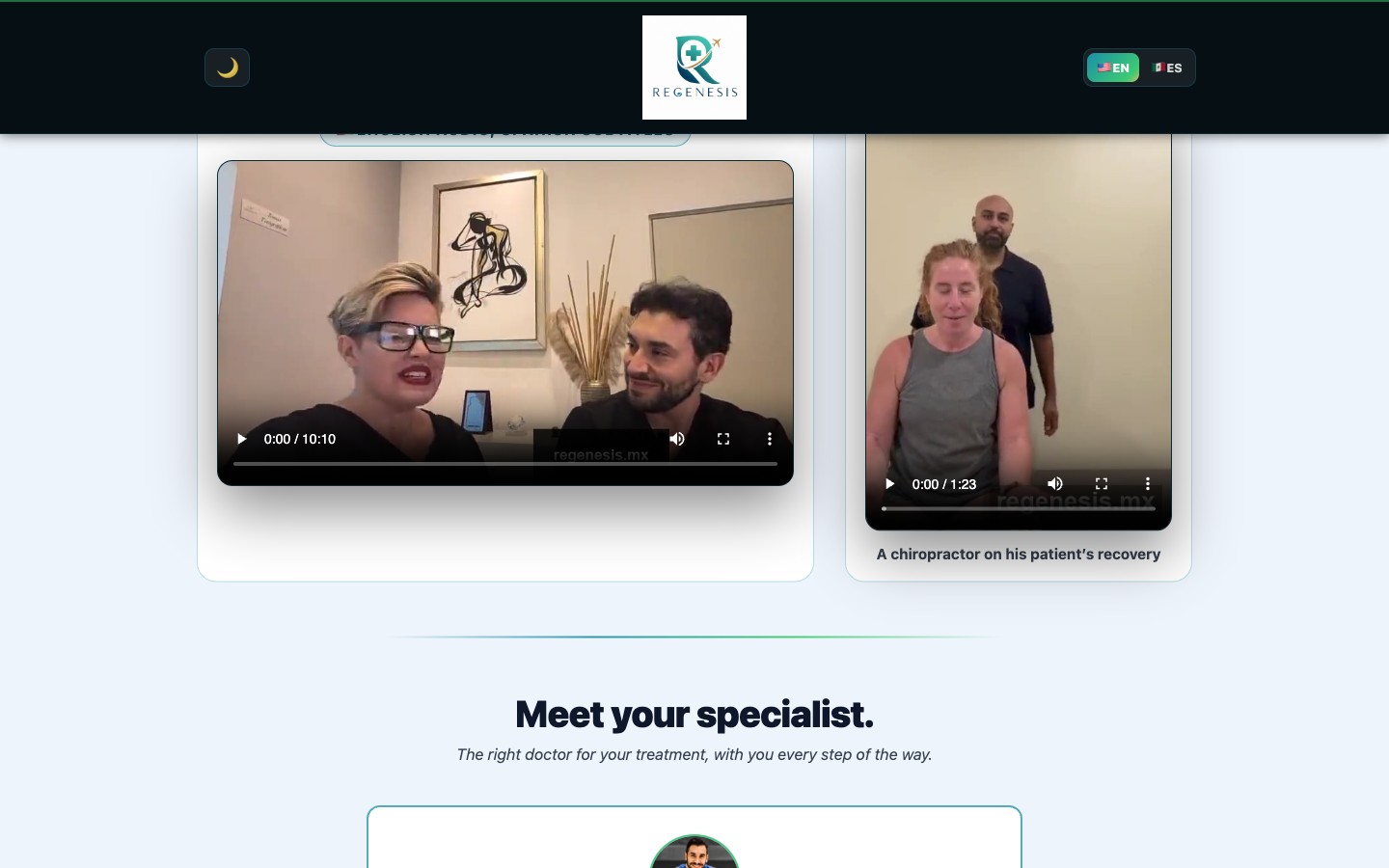
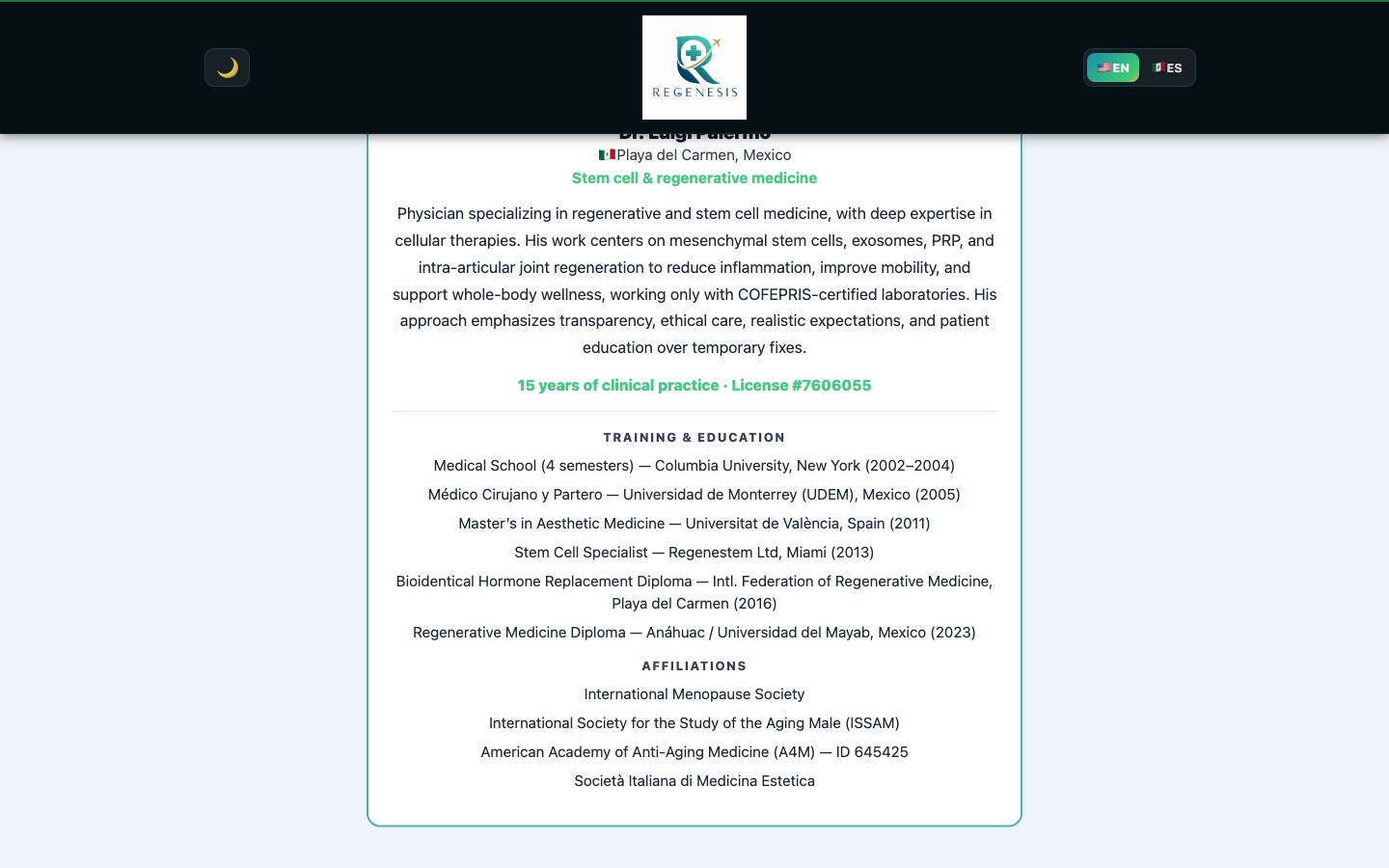
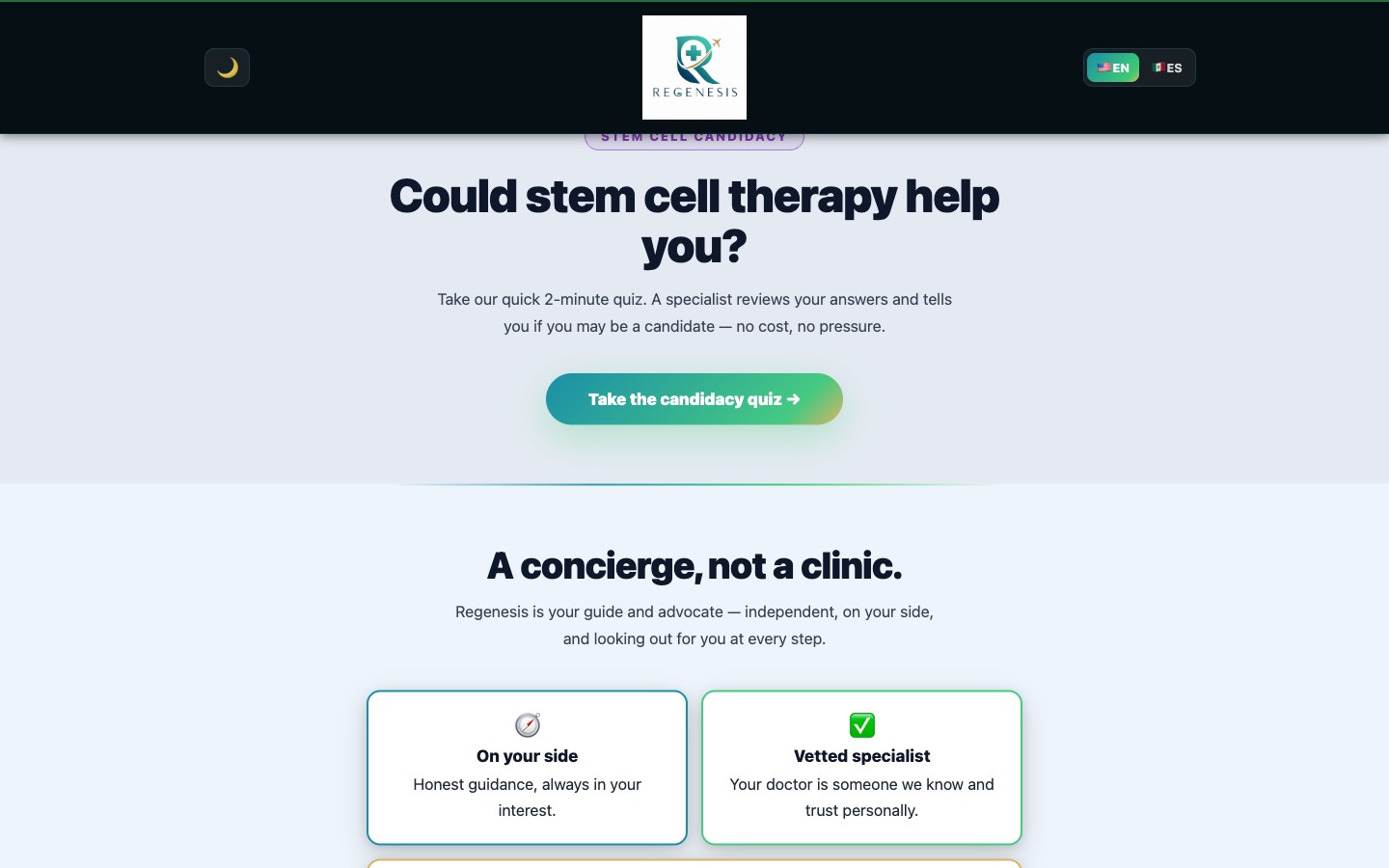
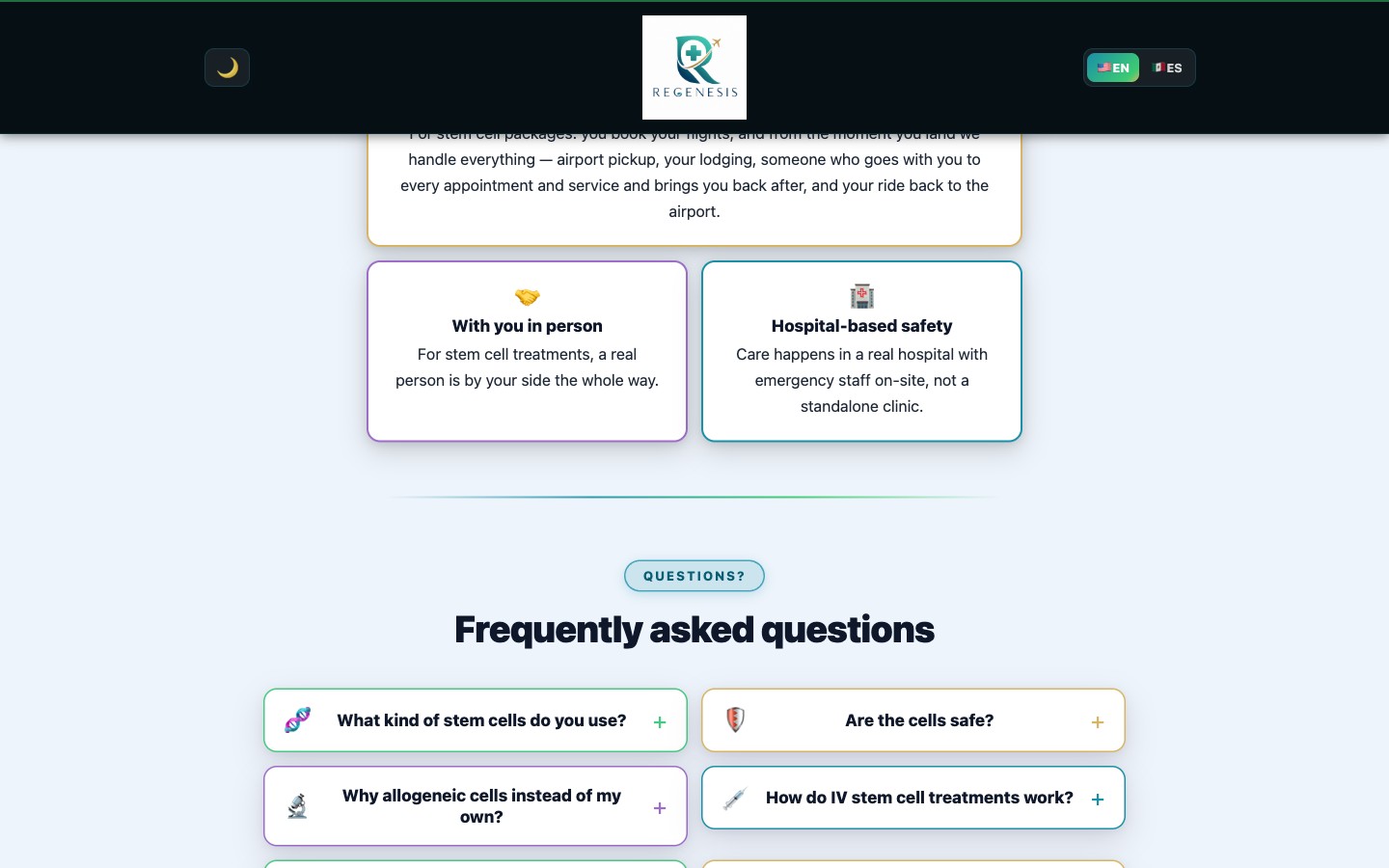
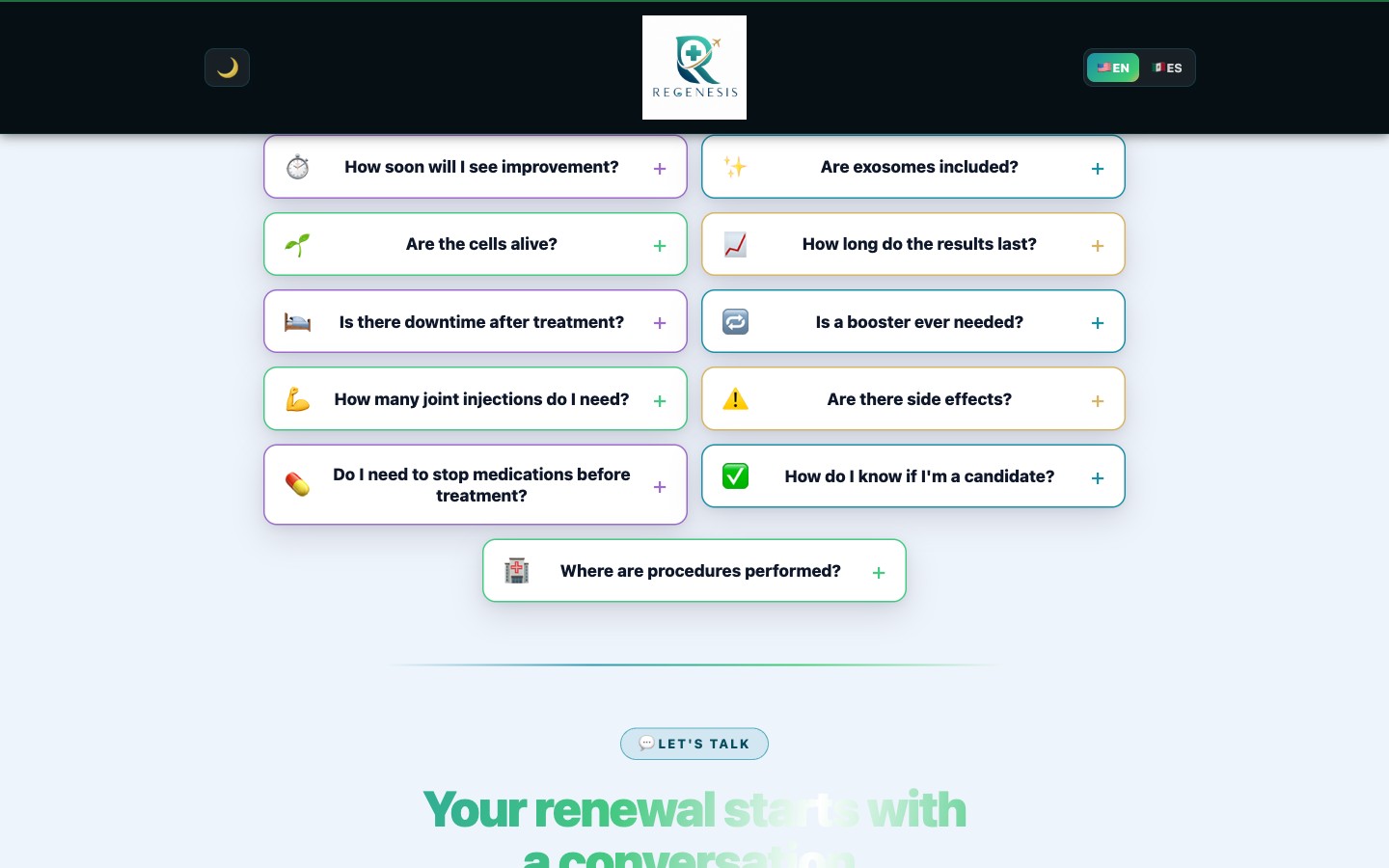
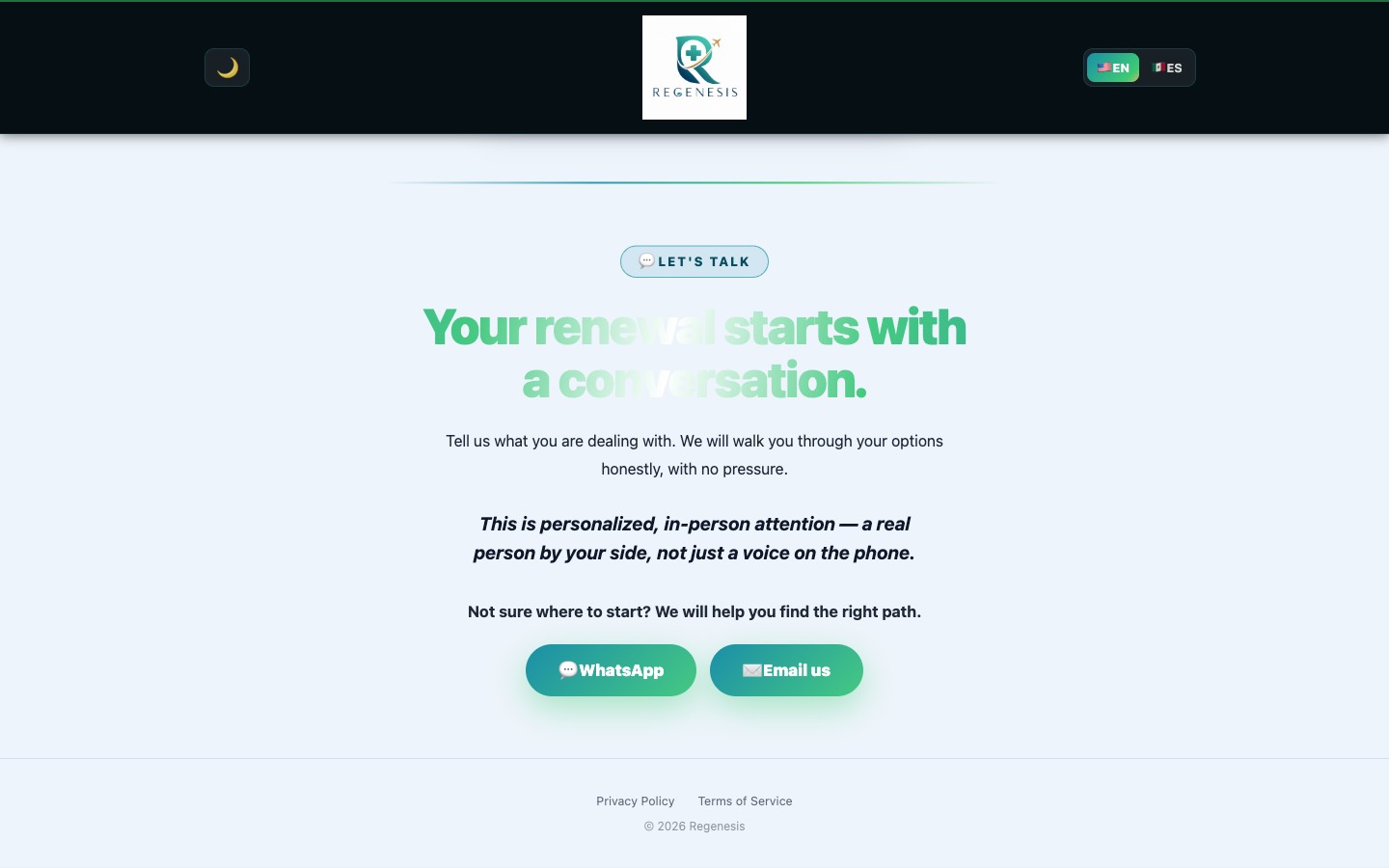
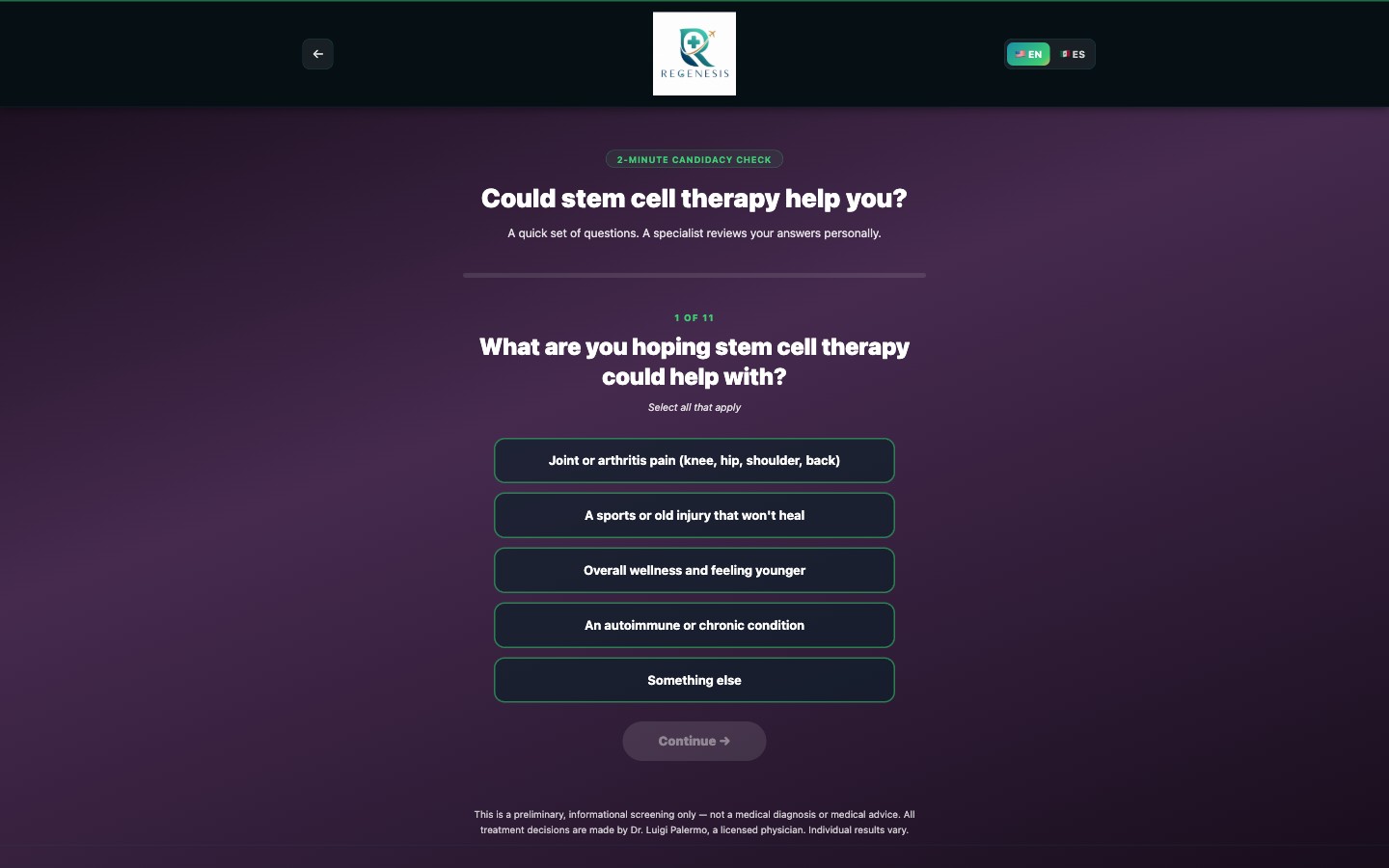
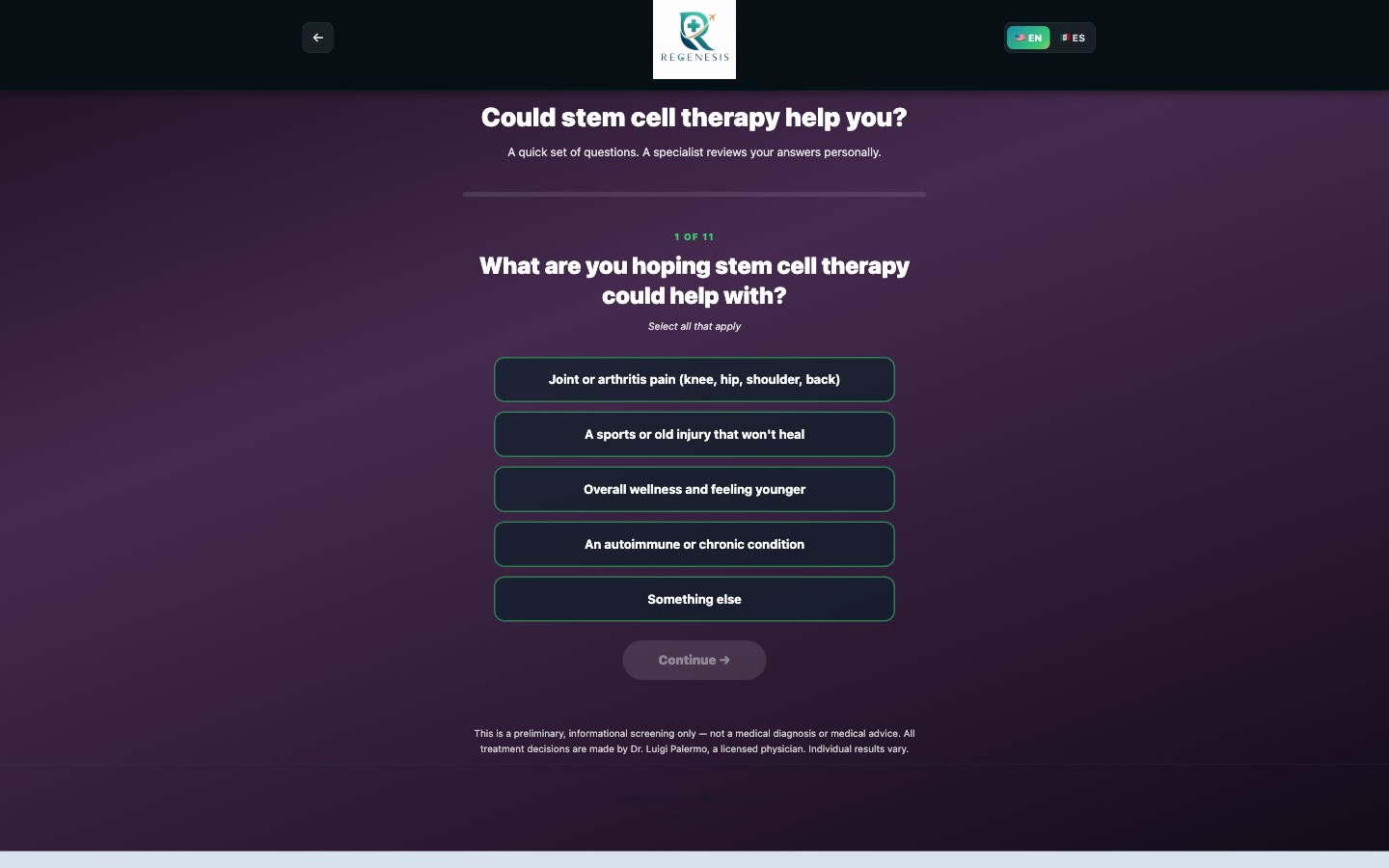
Turns "just looking" visitors into qualified patients. A two-minute quiz sorts real candidates from browsers, medical paperwork gets signed from a phone before anyone travels, and the clinic sees an organized pipeline instead of a pile of chats. The two-minute quiz is public — try it yourself below.
Leads arrive pre-qualified by the quiz instead of cold
Medical paperwork is signed online before the patient travels
Patient data stays encrypted and organized in one place
Light and dark mode — try the toggle on the live site
Scored candidacy quiz that auto-creates pipeline leads, a 15-section bilingual signed medical intake with IP-stamped audit trail, encrypted patient data at rest, and server-to-server lead ingestion into a CRM.
White-label option: your name, your logo, your colors
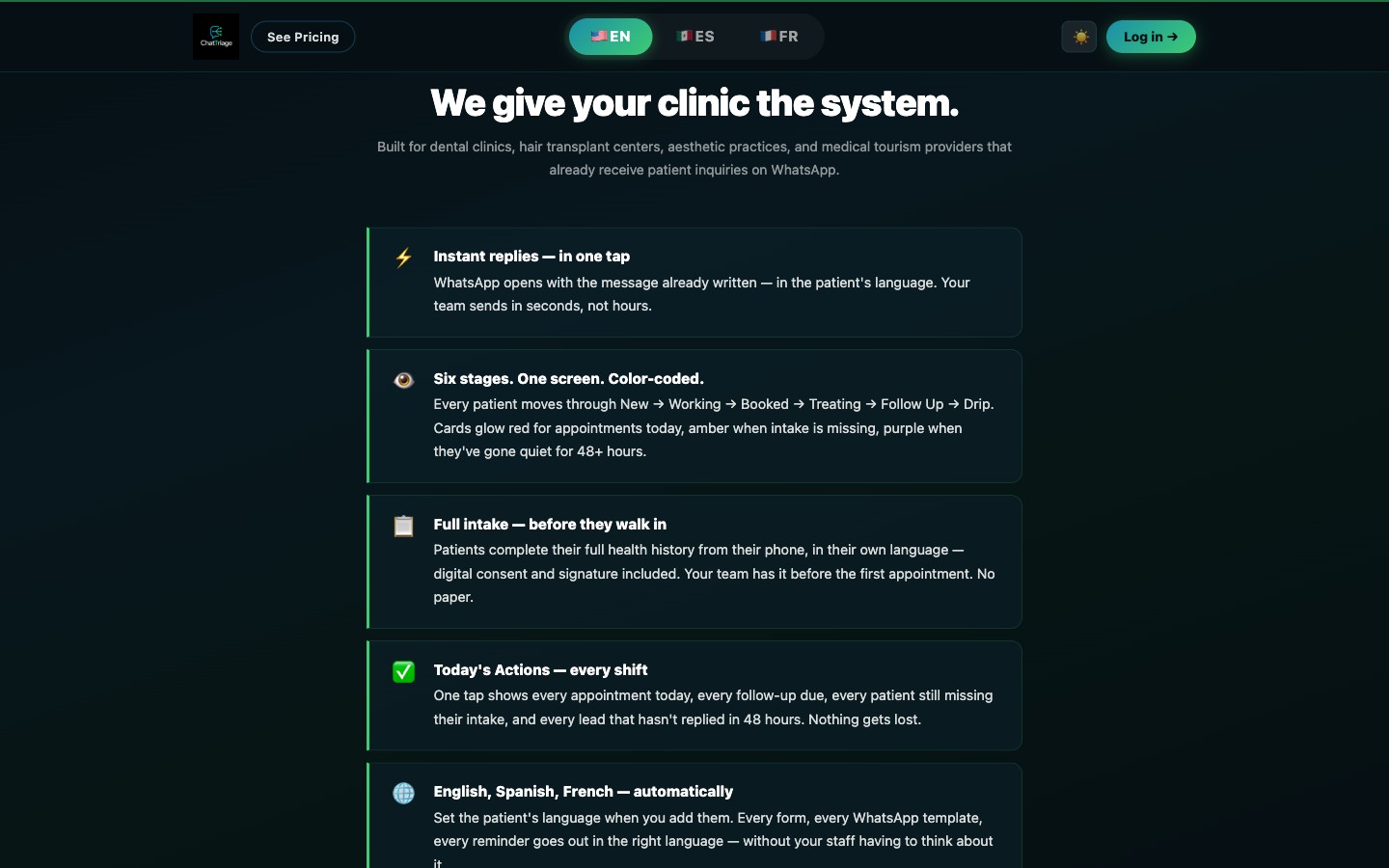
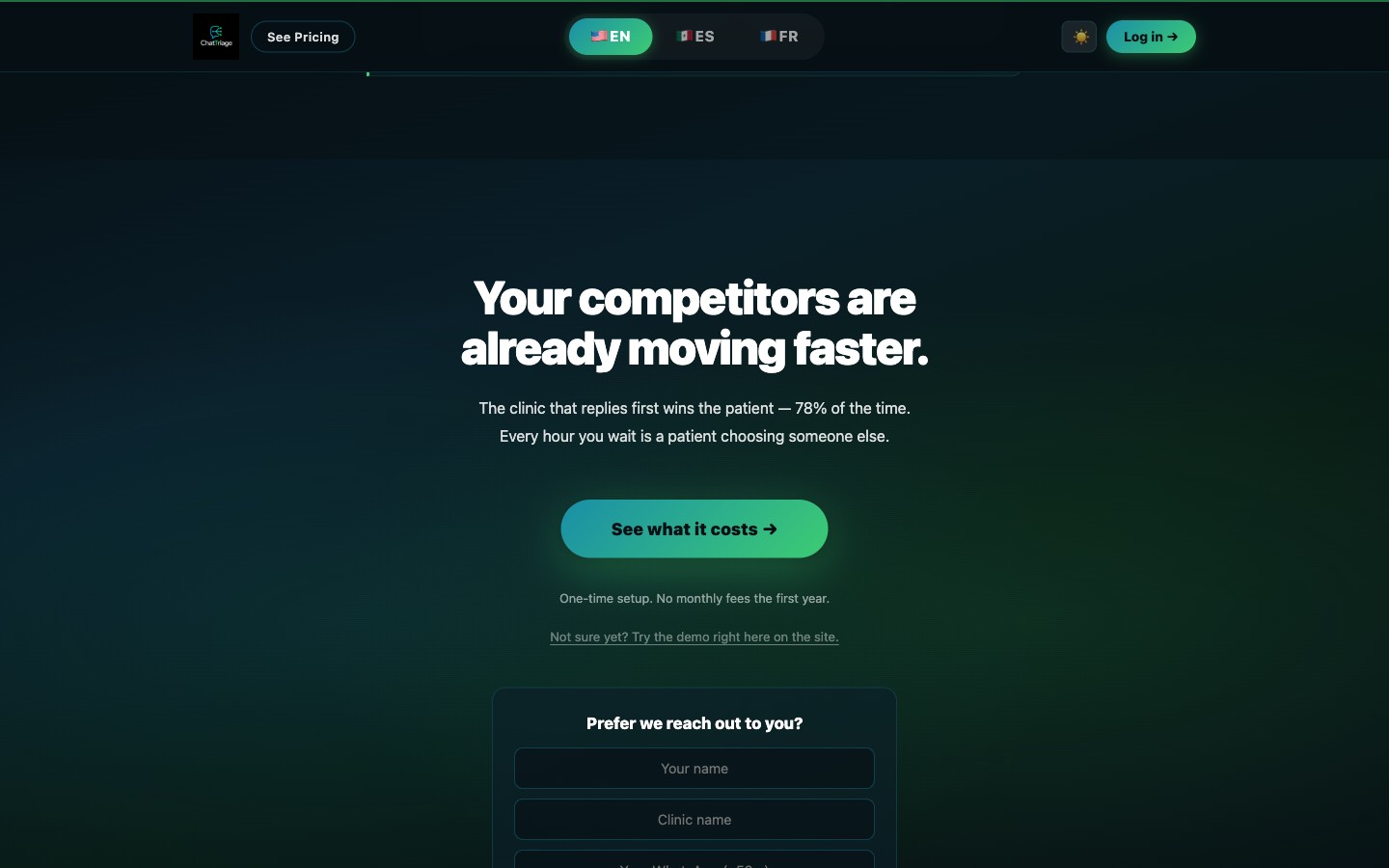
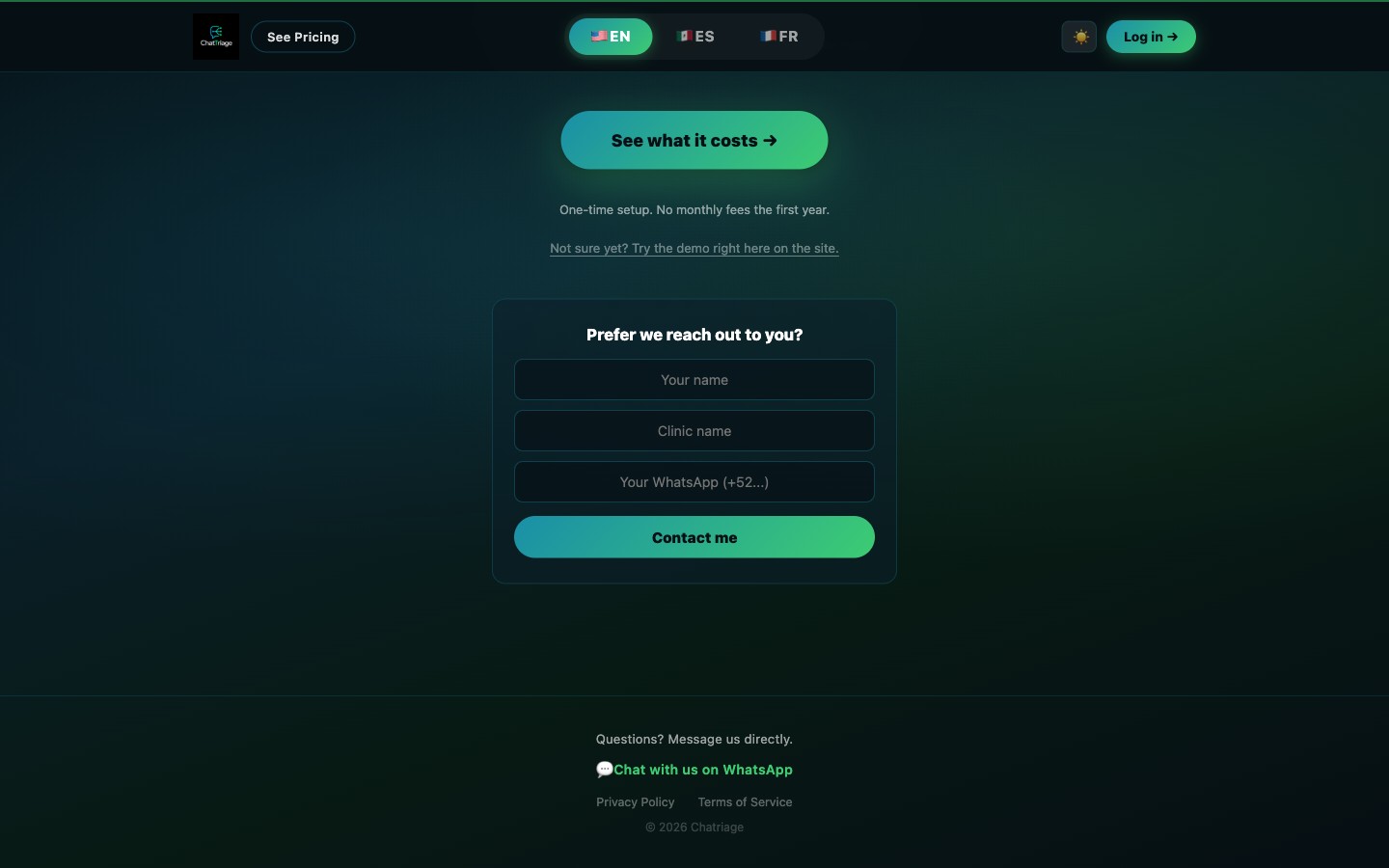
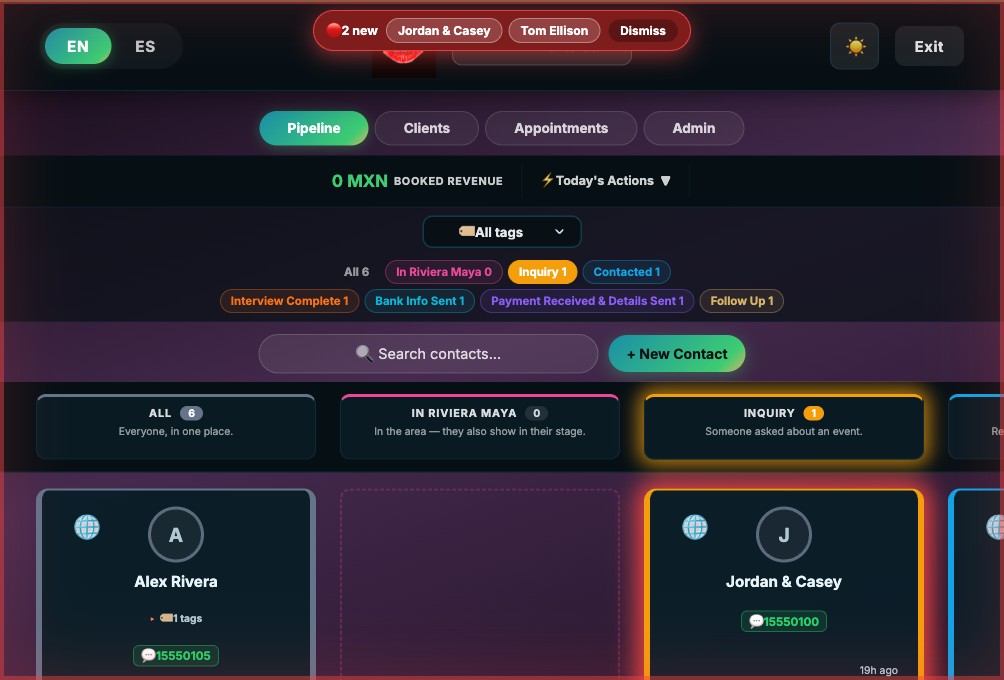
Screenshots: an actual client’s live site
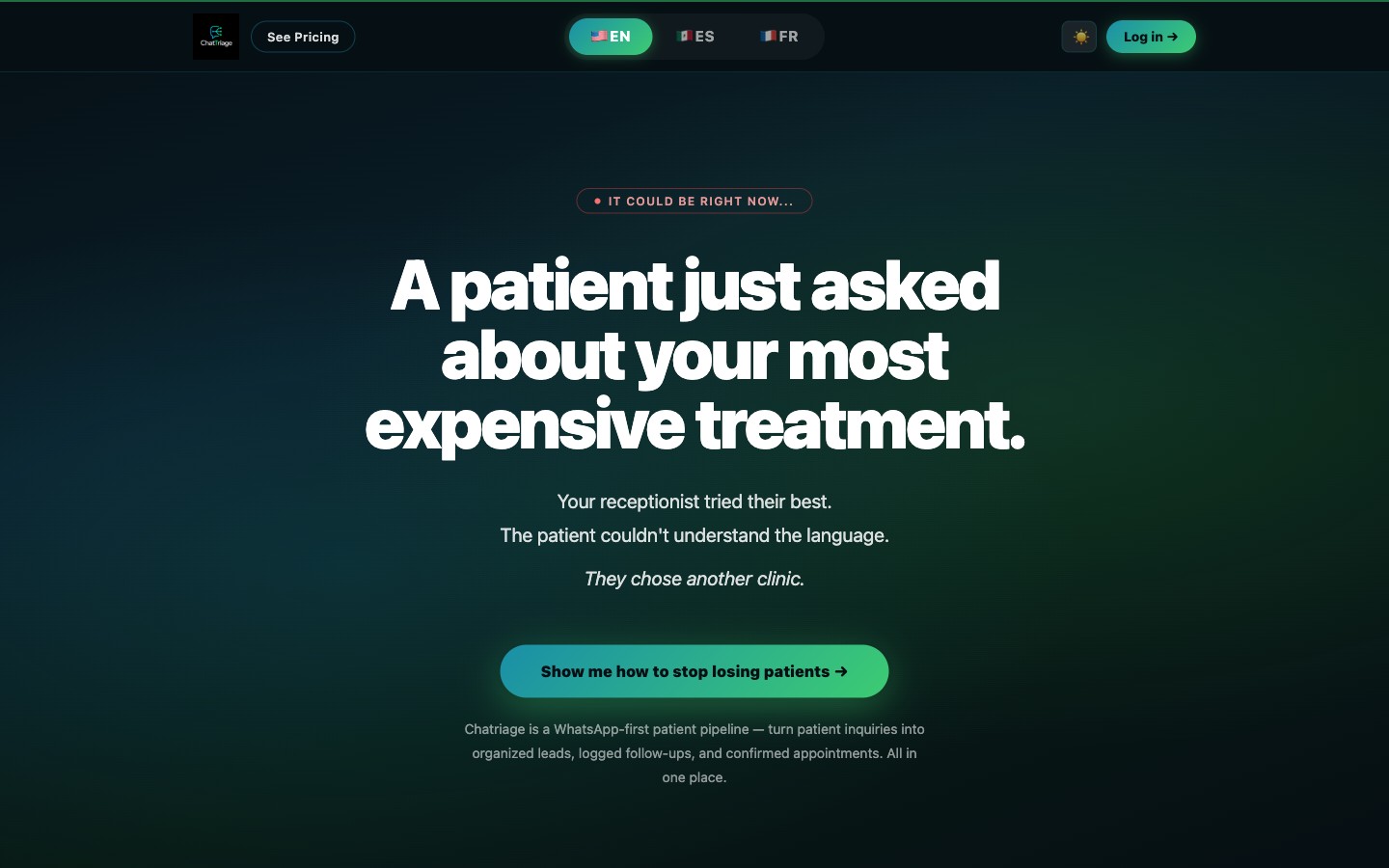
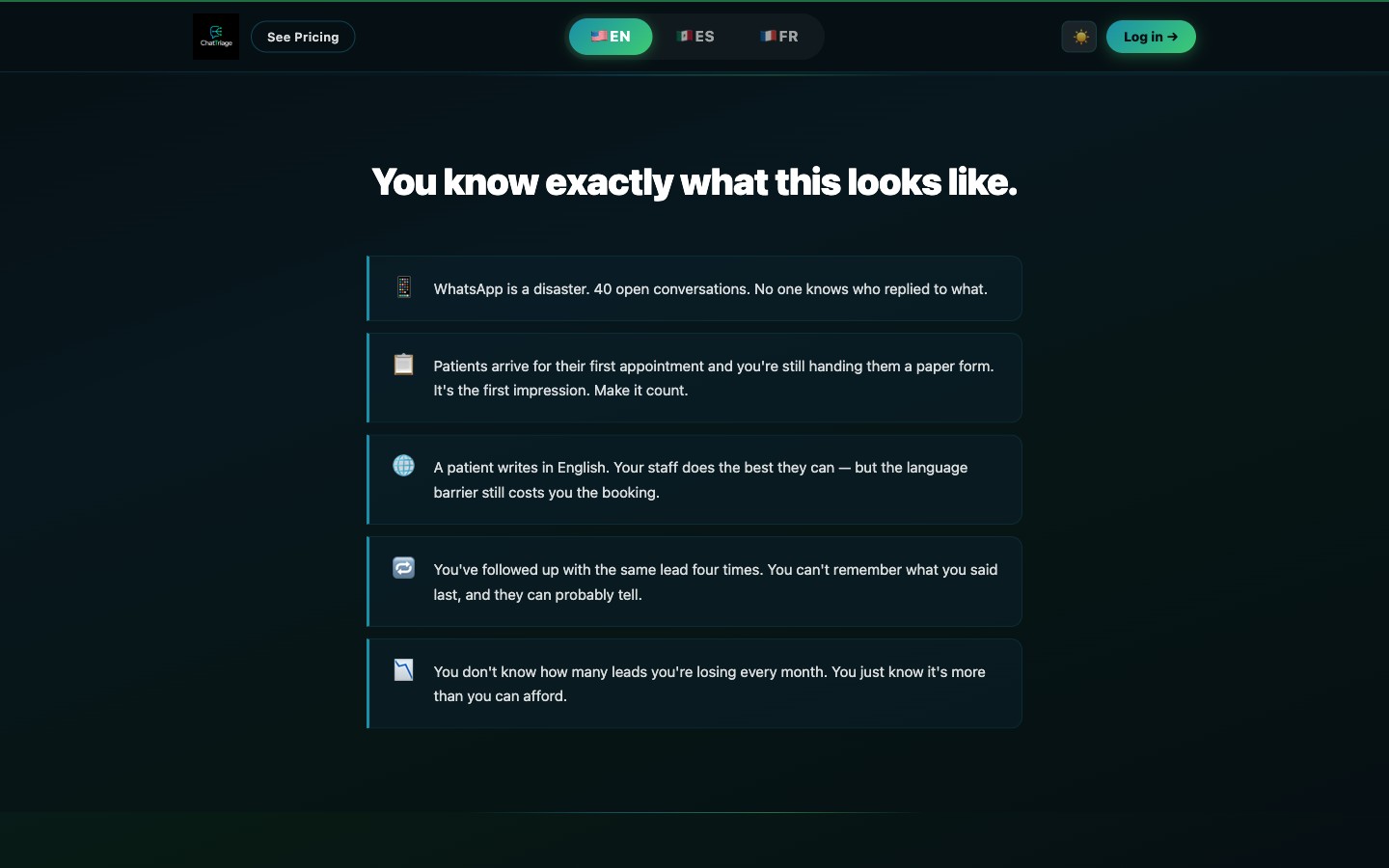
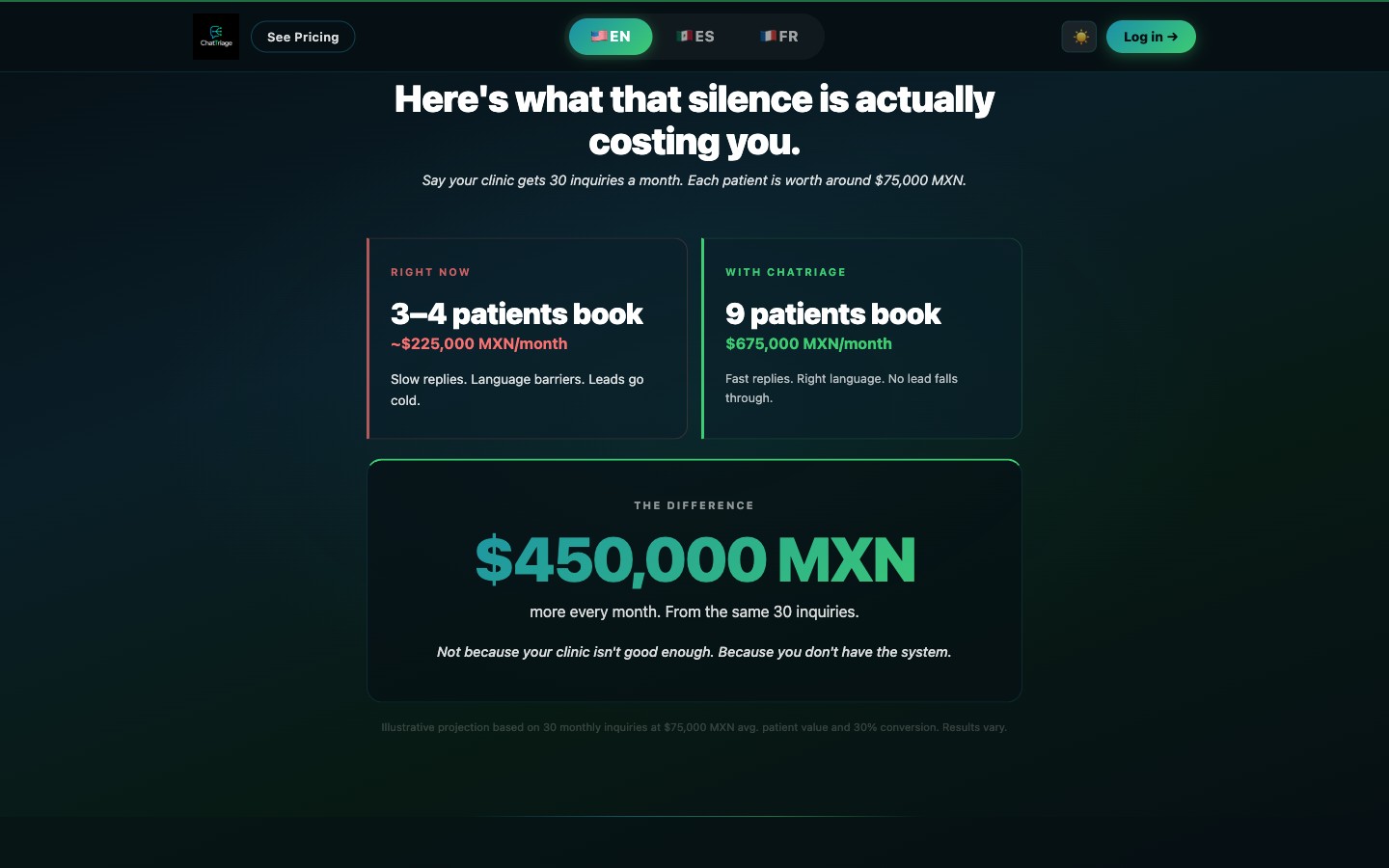
Clinics lose patients when a question from abroad goes unanswered. This CRM lives in WhatsApp, where international patients already are: every inquiry is caught and walked from first message to booked appointment, with reminders automated. Open the demo and see it in ten seconds.
No patient inquiry ever falls through the cracks
WhatsApp-based, so reminders and follow-ups can be automated
The whole team sees every patient's status at a glance
Built for international patients: English, Spanish, French — nothing to install
Light and dark mode — try the toggle on the live site
Multi-tenant SaaS with strict tenant isolation, WhatsApp-first patient communication, a 900-line trilingual medical intake with canvas e-signature, an hourly self-resetting live demo, and CSV formula-injection protection. Built in roughly ten days.
White-label option: your name, your logo, your colors
All your businesses, one screen. Every customer, deal, and booking in its lane under a single login. And if the database were ever stolen, the sensitive parts read as gibberish, because they're encrypted. The demo is open: sample data, resets itself hourly.
All your businesses managed from one login, data never mixes
Two businesses included free — add more as you grow
A stolen database leaks nothing, sensitive fields are encrypted
Every change is logged with who made it, backups run themselves
Light and dark mode — try the toggle on the live site
Field-level AES-256-GCM encryption for 30 sensitive fields with zero-downtime key rotation, per-actor audit logging, JWT auth with instant revocation, and off-site S3 backups. Held up under a six-agent adversarial security audit.
Most projects need a designer, a copywriter, a developer, and someone to keep it running after launch. Here, that is all the same hire.
DesignLooks right on every screen, phone first
CopywritingWords that sell, in English and Spanish
DevelopmentPayments, bookings, dashboards, the works
LaunchDeployed, secured, and live
SupportWatched, backed up, and fixed fast
How it works
One person, start to finish. No account managers, no hand-offs.
1
Tell me what you need
What's missing, what's eating your time, what you wish ran itself.
2
Get a clear plan
You'll know what it takes, what it costs, and when it can be live — before you commit to anything.
3
Watch it go live
Built, deployed, and kept running, with a direct line to me.
Most people hiring a developer are really buying a promise. A proposal, some mockups, a portfolio of screenshots, and then you pay and hope. I removed the hoping. Everything on my page is a live product you can open right now, on your phone, before we ever speak. Click the demos, log in, poke around. If my work doesn't convince you in five minutes, close the tab and you've lost nothing. That's the deal, and nobody else is offering it to you, because almost nobody else can.
When you work with me, the person you message is the person who builds it. There's no account manager relaying your words to a designer who relays them to a coder overseas. You tell me what your business needs, in plain language, and the same brain that heard you writes the copy, designs the screens, builds the system, launches it, and answers you afterward. Nothing gets lost in handoffs because there are no handoffs.
And I don't just build apps, I run them. My own systems take real payments, manage real customers, hold encrypted medical records, and send real bookings every day, in three languages, for real businesses. That changes what I build for you. Someone who has never operated an app builds what looks good in a demo. I build what survives contact with actual customers, because I'm the one who gets the message when something breaks at 11pm on my own products. Every lesson those apps taught me is already baked into yours on day one.
Everything ships white-label: your name, your logo, your business on every screen. Your customers see your company, not mine. And because I work lean, no office, no team of ten billing hours, no bloated servers, you get agency-level product at a fraction of agency cost and agency speed.
So here's why you'd prefer me, in one sentence: everyone else asks you to trust them, and I ask you to try me first.
Everything above is production, not portfolio theater. Real Stripe subscriptions with webhook reconciliation, multi-tenant auth, encrypted health records, trilingual interfaces, automated backups that get restore-tested. One person designed, built, deployed, and operates all of it, which means no requirements lost between a PM, a designer, and a contractor. You're reading the work of the same brain you'd be messaging.
The infrastructure tells you the rest: right-sized machines, boring proven stack, nothing over-provisioned. Systems built by someone who pays the hosting bill and gets the message when their own product breaks get built differently, and you can inspect the difference yourself right now.
Don't take my word for any of it. Open the demos and try to break something.
Tell me what your business needs.
You'll get a straight answer about what it takes, what it costs, and when it can be live.